


How Satellite Technology is supporting the management of invasive aquatic plants in freshwater bodies

A new Floating Weed Manager system has completed testing and is now ready for commercial upscaling. The system uses data from Earth Observation satellites to monitor and support the management of invasive aquatic plants in freshwater bodies across the globe. The Floating Weed Manager was developed under ESA’s Business Applications and Space Solutions (BASS) Programme by the UK Centre for Ecology and Hydrology and the Environmental Research Group at Kings College, London.
Floating invasive aquatic weeds can rapidly clog up lakes, reservoirs and navigation canals, leading to major economic impacts for businesses, fisheries and leisure activities. Growth and spread of these weeds are a global problem, requiring frequent monitoring to inform boat access, target weed control programmes, and provide early warning of weed problems in new locations. However, providing a continual and complete picture is challenging. Existing survey methods, undertaken by boat and helicopter, can take up to a month to cover an entire body of water. Many countries lack the funds for regular monitoring, and in situ surveys expose staff to health and safety risks from weather and wildlife.
“We are pleased to have supported the Floating Weed Manager system, which is a great example of how satellite technology can deliver both environmental and economic benefits” said Francesco Feliciani, Head of the Company Led Projects Section at ESA. “We believe the service has the potential to transform the management of waterways across the world.”

The Floating Weed Manager combines radar and optical images from ESA Sentinel satellites to provide more comprehensive and more frequent vegetation maps than existing ground surveys. Once an image is acquired by the satellites it is delivered to the Floating Weed Manager within 48 hours, with a cloud-free whole-waterbody map available every 1 - 2 weeks. With timely and accurate data delivery it is easier to evaluate the scale of the problem and earlier intervention is possible. This means that a more targeted approach can be taken, consequently reducing the volume of herbicides needed to control the spread.
“For the first time ever, we can get a macro look at our project on a weekly basis with a plant focus” said Jessica Fair from The United States Army Corps of Engineers (USACE), one of the partners in the project. Jon Lane, also from USACE, added “Current methods of quantifying floating weed cover include costly helicopter surveys. If sufficient information is gathered with this method, there could be significant savings while improving accuracy and precision of whole lake floating weed cover estimates.”
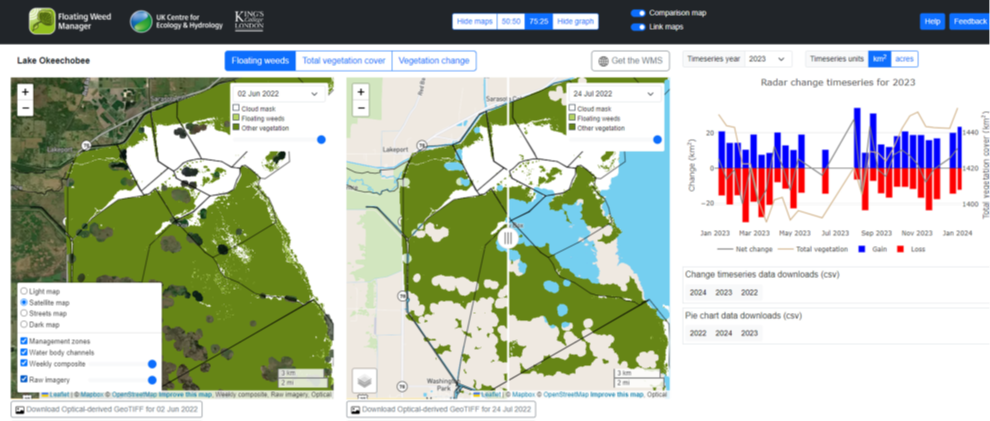
The system was co-designed with partners in the field to ensure it met user demand, with coverage tailored to the characteristics of local water bodies. The United States Army Corps of Engineers (USACE), responsible for maintaining inland water transport and infrastructure routes in the USA, and the Florida Fish and Wildlife Conservation Commission were involved from the outset in the design and testing of the system.
Successful pilot tests took place at Lake Okeechobee and in South Florida, USA, and at Lake Victoria, Kenya, in partnership with The Kenyan Marine and Fisheries Research Institute (KMFRI). Feedback from the successful tests was extremely positive, and the system is now ready for commercial upscaling. With floating invasive weeds found across the globe, there is large market potential for widespread uptake.
From ski slopes to arenas - the space-powered race for sustainable sports

The health, entertainment and commercial benefits of sporting events are well-documented but mitigating the environmental impact of major sporting competitions is a growing priority for the sector. Preventing deforestation, fighting climate change, protecting biodiversity, reducing pollution and carbon emissions, and growing the circular economy are all on the agenda, and a recent collaboration between the European Space Agency (ESA) and the International Ski and Snowboard Federation (FIS) aims to put the technology of space applications at the service of sustainability in snow sports.
The announcement was made during the ESA Business Applications and Space Solutions (BASS) conference, ‘Towards a space-powered economy’, where the two organisations signed a Memorandum of Intent focused on the development and implementation of space applications to facilitate innovation to mitigate the challenges facing the sector.
“The connection between sports events and sustainability is becoming increasingly important, as the industry plays a key role in advancing the United Nations’ Sustainable Development Goals” said Davide Coppola, Head of ESA’s Space Applications Initiatives Section. “This collaboration not only fosters innovation, but also has the potential to make a substantial impact on the broader events industry, supporting its efforts to achieve essential sustainability targets in a large scale.”
“Issues like the climate crisis and loss of biodiversity do not pertain to any specific area of society: they are the fundamental challenge of our lifetime, for all of us, and can only be addressed through collective effort. This is our reasoning when entering a partnership like this with ESA, which brings the highest level of human knowledge and technology to our common mission of making the world – and snow sports, for that matter – much more sustainable,” says FIS Sustainability Director Susanna Sieff.
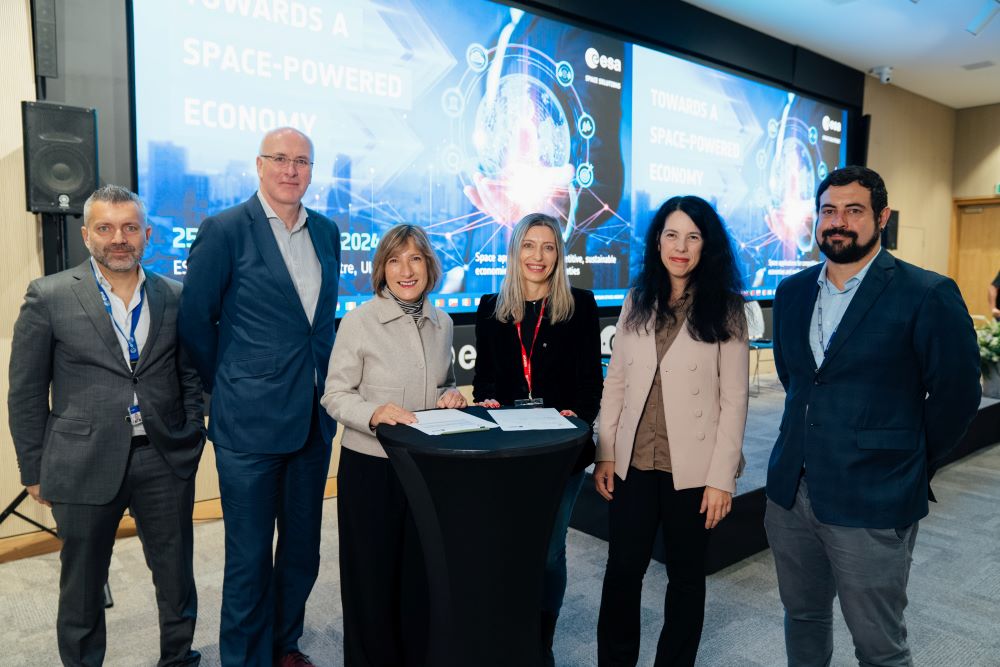
The collaboration announcement comes ahead of ESA’s ‘Space for Sustainability in Sports and Mass Events’ funding opportunity that opens in February 2025. A webinar outlining the scope of the opportunity will be held the same month and over the course of the coming weeks, ESA and FIS will work to outline the first joint activities under the collaboration agreement.
Additionally, the Memorandum of Intent anticipates the potential implementation of space applications to address other future common topics of interest such as athlete performance, safety and security around events, and recreational snow sports experiences.
The collaboration with the FIS is the latest in a series of sports and events-related initiatives undertaken as part of the BASS programme, which has already supported a number of successful projects looking at inclusivity in sports, safety and security at major events, traffic and crowd management at major tournaments and more. Collaborations with UEFA the Italian Taekwondo Federation, Swiss Timing and more continue to facilitate projects across many sports, from sailing and football to cycling, athletics and golf. The open call Space for Olympic Games continues to offer funding opportunities across the sector.
As part of the work around space and sport, ESA has produced a market report outlining the commercial opportunities and use cases for digital transformation and sustainability in sport.
Subscribe to the Space Solutions newsletter
ESA and Prototypes for Humanity forge partnership to drive innovation for a sustainable future
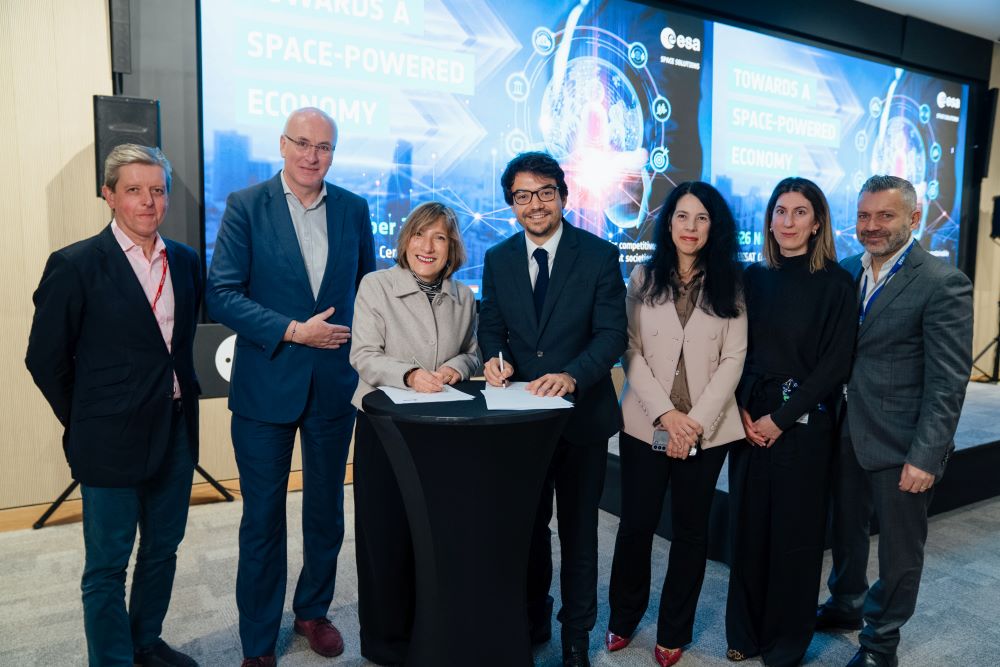
Simon Atkinson (Prototypes for Humanity), Nick Appleyard, Geraldine Naja, Tadeau Baldani Caravieri (Prototypes for Humanity), Rita Rinaldo, Mina Syriou, Davide Coppola
The European Space Agency (ESA) has signed a Memorandum of Intent (MoI) with Prototypes for Humanity (P4H), an Art Dubai Group programme. This partnership seeks to leverage space technology to tackle pressing global challenges and drive sustainable development on a global scale. It will also enable the demonstration and validation of innovative projects by piloting solutions within the UAE market, harnessing local partnerships and resources to maximise impact and scalability. The MoI was signed by Geraldine Naja, Director of ESA's Commercialisation, Industry and Competitiveness Directorate and Tadeu Baldani Caravieri, P4H Director, during the Towards a Space-Powered Economy conference, held at ESA’s ECSAT facility in Harwell, UK, on November 26, 2024.
Prototypes for Humanity is an international platform dedicated to promoting and supporting innovation across diverse disciplines of science and humanities. It focuses on solutions that deliver tangible positive impacts for society and the planet. Through its collaboration with ESA, P4H will strengthen its ability to connect changemakers with ESA’s expertise, tools, and resources. In turn, ESA will work with P4H’s global network to apply space technologies to areas such as green energy and climate resilience, advancing the United Nations Sustainable Development Goals (SDGs).
“This partnership highlights the power of multisectoral collaboration between space and non-space players,” said Nick Appleyard, Head of the Applications and Solutions Department at ESA. “The cooperation with P4H will allow the creation of innovative solutions that deliver real-world impact, fostering sustainability and progress across sectors.”
Davide Coppola, Head of ESA’s Space Applications Initiatives Section, added “through this partnership, we aim to combine groundbreaking ideas with space technologies to tackle critical sustainability challenges. This collaboration will empower innovators and industries to create transformative solutions with tangible benefits.”
“Prototypes for Humanity is proud to partner with ESA to amplify the impact of visionary projects,” said Tadeu Baldani Caravieri. “Together, we will connect innovators with the expertise and tools they need to address challenges at the intersection of technology, creativity, and sustainability.”
This partnership marks a significant milestone for both organisations, as they unite to advance innovation and sustainability on a global scale.
Find out more about Prototypes for Humanity
Find out more about ESA's work in the energy sector
Sign up for the Energy Bulletin

New insights into global water basins from space
April, 9 / 2025
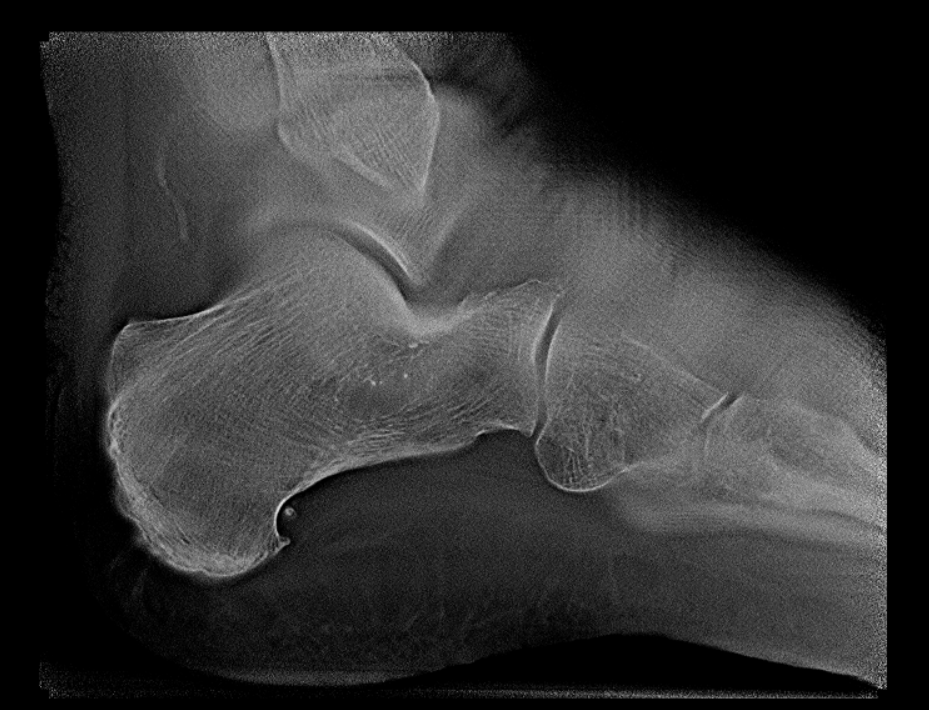
New portable 3D imaging technology set to transform patient care
November, 29 / 2024
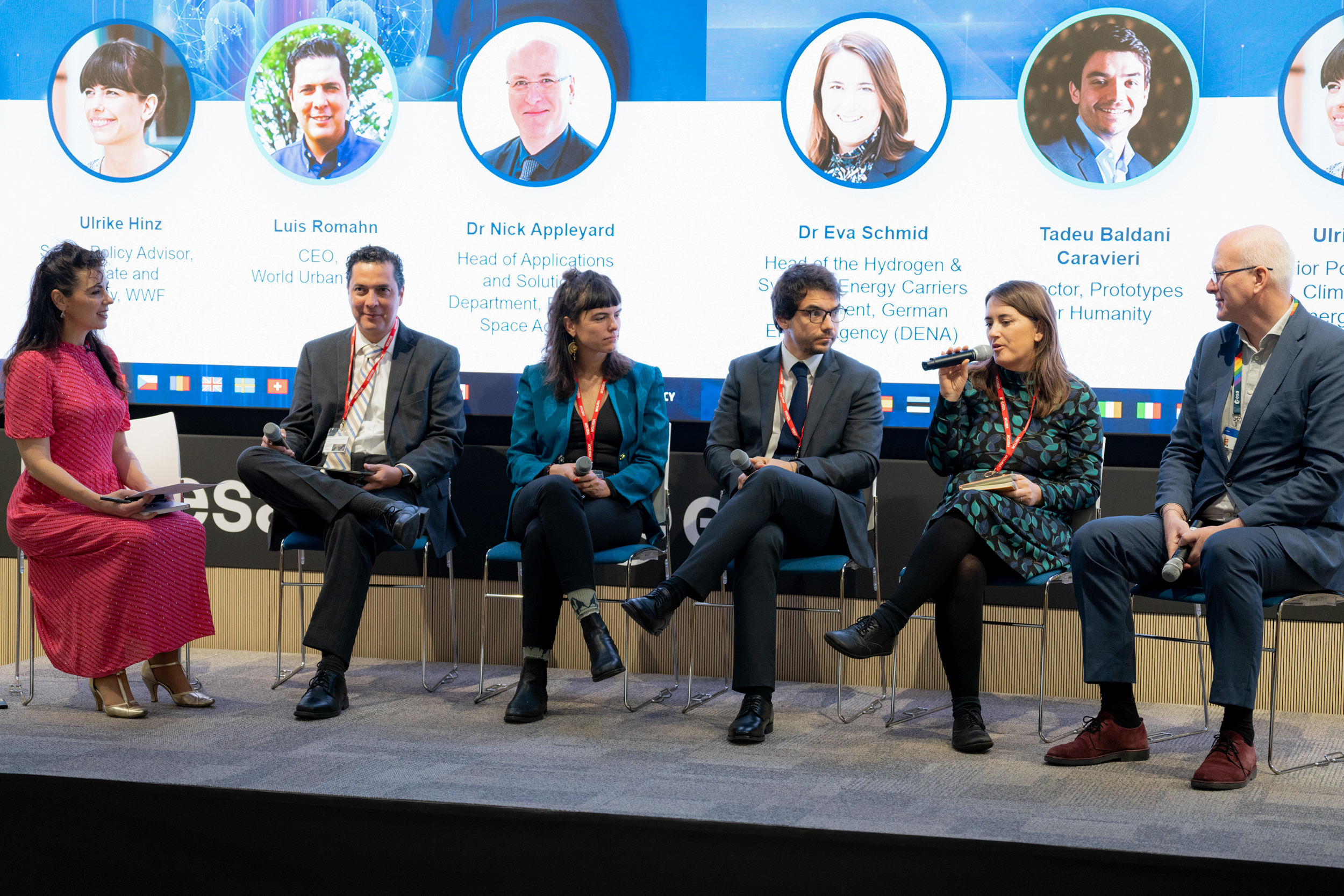

ESA highlights the role of space in emerging green and smart cities
March, 25 / 2025