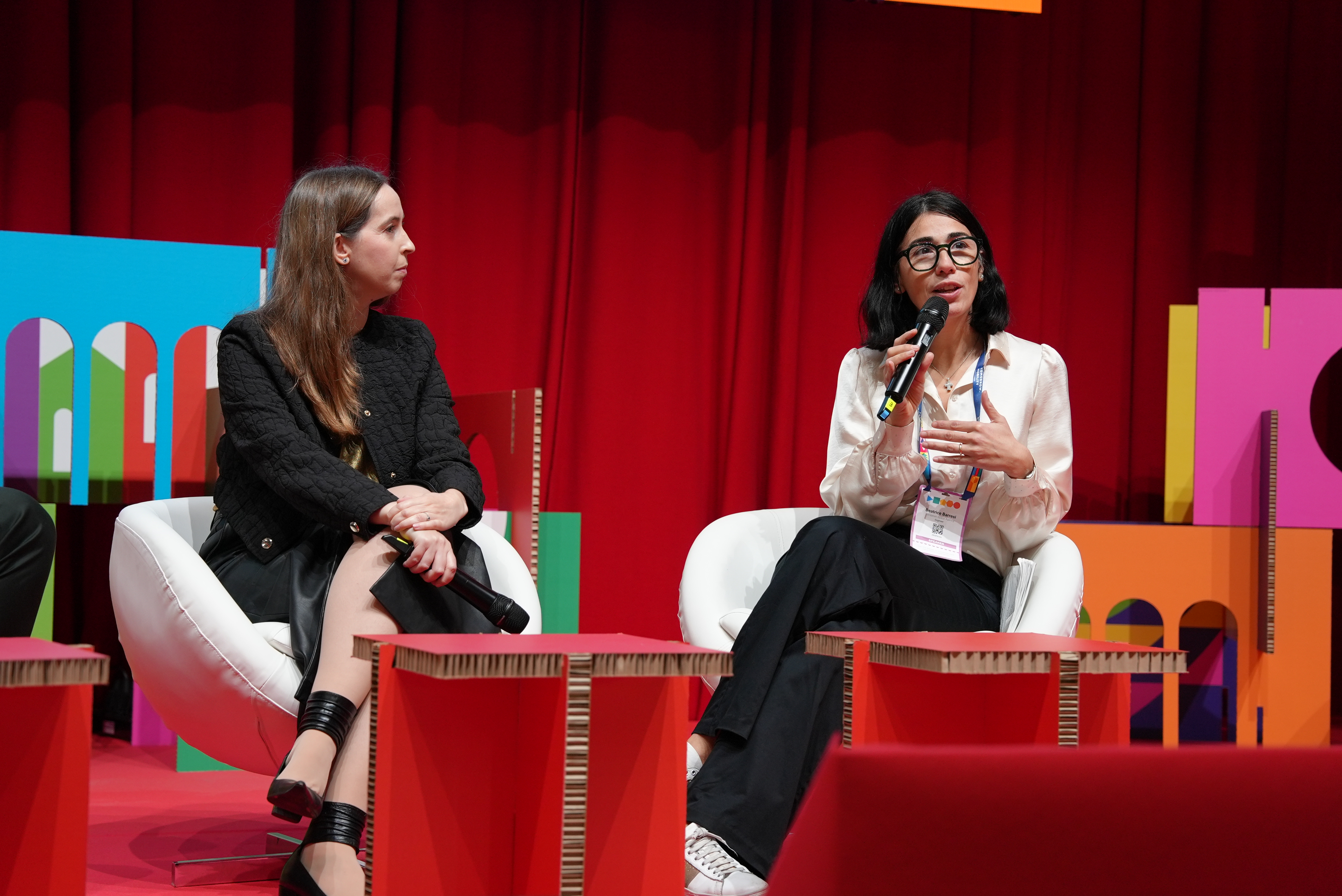
Beatrice Barresi, Senior Sustainable Applications Officer, ESA Business Applications and Space Solutions
Beatrice Barresi from the Business Applications and Space Solutions (BASS) Programme at ESA shares how her team helps European companies turn space data into concrete sustainability solutions and why she believes sustainability is the only way forward.
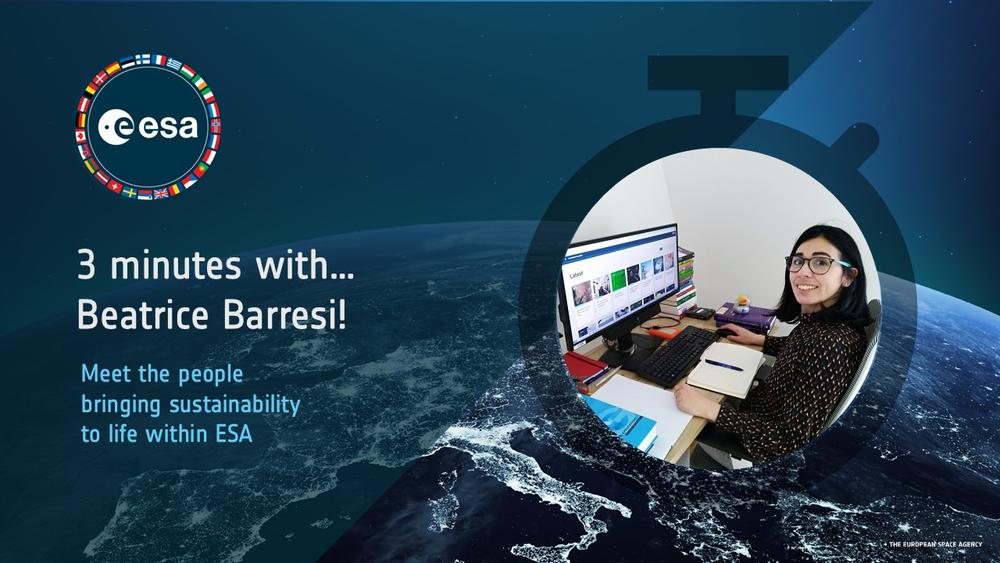
Beatrice works in the Business Applications and Space Solutions (BASS) team at ESA, which is dedicated to helping European companies develop innovative applications using space data. These solutions span many sectors. “Agriculture, energy, transport, bioeconomy, mobility, maritime… you name it,” she says. “Our goal is to help companies create solutions with real impact for the planet, for people, and for the economy.”
BASS supports companies with technical and business guidance, funding, partnership building, and the authorised use of the ESA brand when seeking investment. Each company works with a Technical Officer who guides them throughout the project lifecycle.
Beatrice’s focus is on ensuring sustainability is embedded in all these activities. “My work is to make sure environmental sustainability is considered in every project and partnership. We strive to support companies wishing to develop business models that use space data to deliver services with high environmental impact potential.”
From remote sensing to real-world impact
Trained as a telecommunication engineer specialising in remote sensing, Beatrice began her ESA career in the Earth Observation Directorate. “Studying the planet fascinated me,” she recalls. “Space gives you an extraordinary overview of how our environment is behaving.”
Over time, she felt a pull toward applications with direct societal impact. “I wanted to understand how this information could actively support the green transition and reach the people who really need it, such as farmers, water operators, and city practitioners.”
She has been at ESA for almost 15 years, most of which she has spent in BASS and the last two fully dedicated to sustainability.
A portfolio driving the green transition
Unlike a single-mission programme, BASS manages a wide portfolio, and Beatrice coordinates its sustainability-related work. “When we looked back over the first ten years of BASS, we saw that we have supported around 300 sustainability-related activities, and the programme has invested more than €180 million in them,” she explains. “Today, half of the entire BASS portfolio contributes to the green transition.”
These activities range from optimising mobility systems and advancing the bioeconomy to smart city services and sustainable maritime operations. One project has made a lasting impression: a water-management solution developed for operators in the Netherlands.
“They saved the equivalent of 200 Olympic swimming pools of water in a single region. Imagine the impact in a place where water is truly scarce.”
Measuring what matters
Historically, companies supported by BASS reported mainly on economic results such as job creation and revenue growth. Under Beatrice’s guidance, the programme now also measures environmental and social impact.
“We produce what we call green KPIs,” she says. “Water saved, emissions reduced, natural ecosystems protected. And we are now tracking contributions to the Sustainable Development Goals. Around 80% of BASS activities support environmental or social SDGs.”
Working outside the space bubble
Many people assume that Beatrice’s work revolves around ESA and space-industry stakeholders. The reality is quite different.
“Most of my meetings are not with space people,” she says. “I talk to farmers, water operators, policymakers, innovators, city officials - stakeholders who may initially think space has nothing to do with their challenges.”
Building trust starts by listening. “We cannot begin with space. We must start with their priorities, their language, and their pain points. Then space becomes part of the solution. Sustainability cannot happen in silos; it needs everyone around the table.”
This approach has also shaped the Space for Bioeconomy Task Force, which Beatrice launched and coordinates. She sees it as one of her proudest achievements. “Bringing so many different stakeholders together was not easy, but it is where real impact begins.”
When asked what message she hopes colleagues across ESA will take from her work, she is clear: “Sustainability should not be seen as a burden. It is a way to grow, to innovate, to become more competitive and resilient. For companies and for ESA alike.”
She believes space can and should play a key role in Europe’s green transition. “Space is not the whole solution, but it must be part of the conversation.”