
Objectives of the service
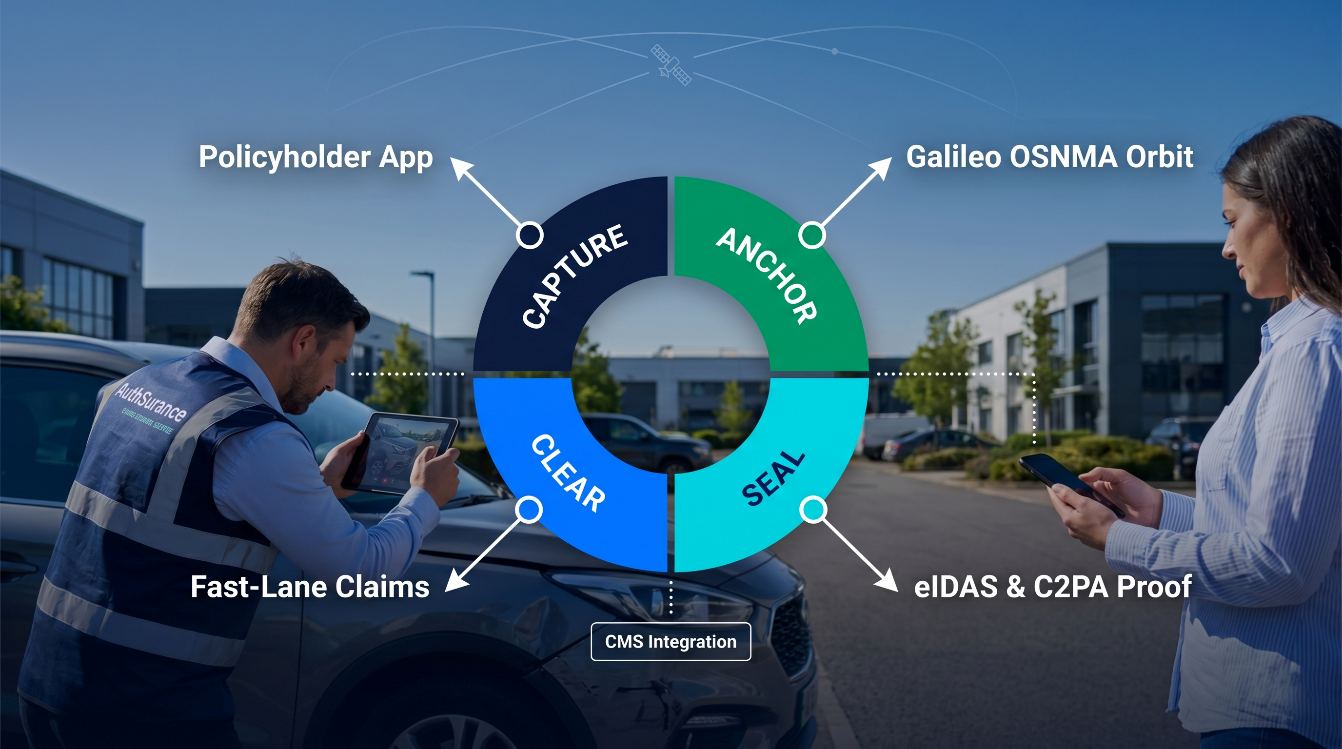
Is this evidence of a claim about a loss event true or false? Is the received photo or video real or AI-manipulated? Since the rise of generative AI, end users can easily create media content based on a prompt. This capability seriously affects the insurance sector, as the number of frauds is increasing.
The goal of this solution is to mitigate the risk by reducing the chance of successful fraud. The stored security attributes can describe the circumstances of media content creation:
-
when was it created?
signed date/time is provided by GALILEO/OSNMA layer
-
where was it created?
signed location is provided by GALILEO/OSNMA layer and measured pseudorange
-
who created?
verified author identity is provided by eIDAS-compliant user identification service
-
real content was captured?
verified reality is provided by AI-detection service of C2PA and forensic tools
Users and their needs
The solution may be interesting to claims/loss adjusters of insurance companies that support remote/online scenarios for reporting loss events and submitting claims.
Service/ system concept
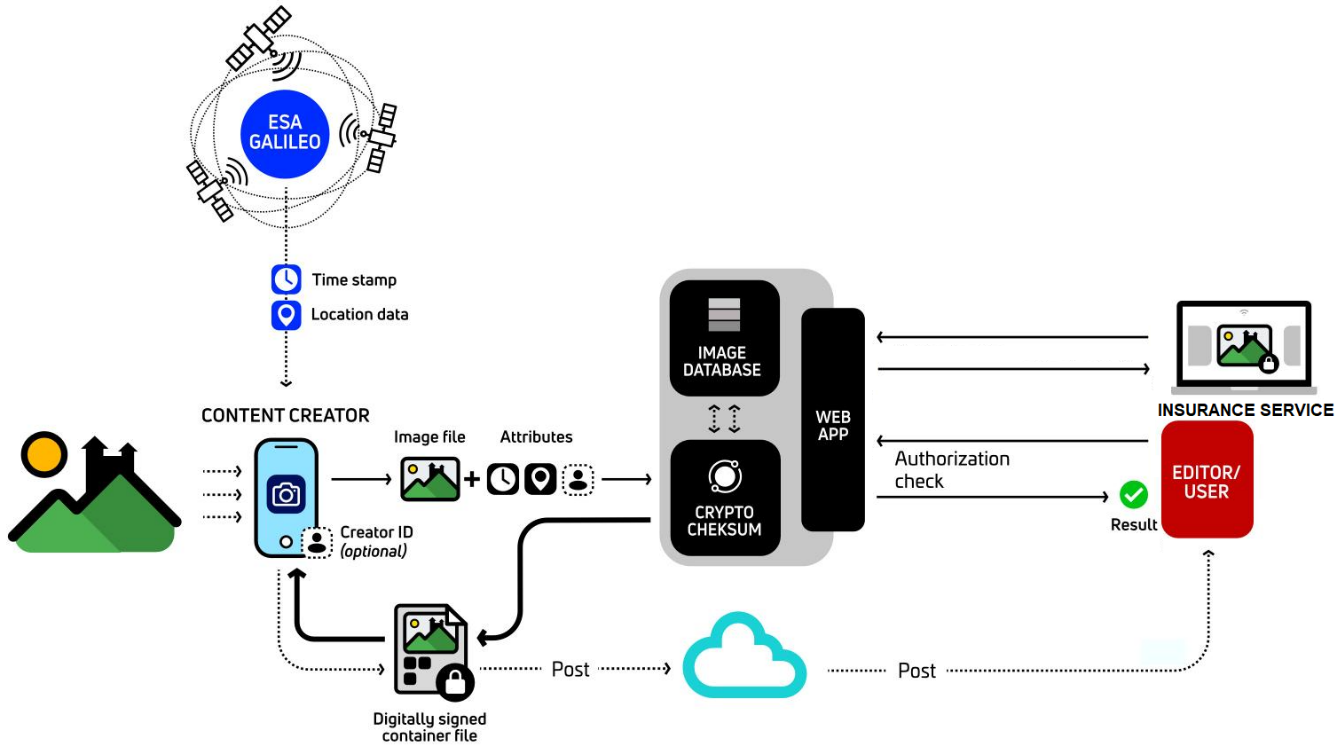
The content creator is a subscriber of an insurance company. The content creator installs mobile application of insurance company and creates a user account. The environment of the mobile application (the mobile phone itself) contains a GNSS receiver and has a network connection. In case of loss event, content creator launches mobile application to take photo or video. In the background, the mobile application gathers continuously the GNSS signals, verifies them and stores them. If OSNMA packets are missing in a sub-frame, the server solution with GNSS receiver can help with cryptographic verification. When a photo or video is captured, a realness check is performed and then GNSS signal raw data are embedded into the file. Optionally, the identity data of content creator can be embedded, as well. The photo/video and all the security attributes are signed by a C2PA and/or eIDAS-compliant signature to ensure the link between the metadata and the media content. The finalized package is submitted to insurance company.
The claims/loss adjuster of insurance company verifies the package and can make a decision on approval with low risk.
Space Added Value
The broadcasted raw data of GALILEO/OSNMA is signed by the system. This signature is based on asymmetric key cryptography which means that anybody can verify the authenticity of the protected data. In this case, civilian services, such as insurance companies can be sure about when and where a photo or video was taken. This a real advantage compared to other GNSS services such as GPS, GLONASS or BeiDou.
Current Status
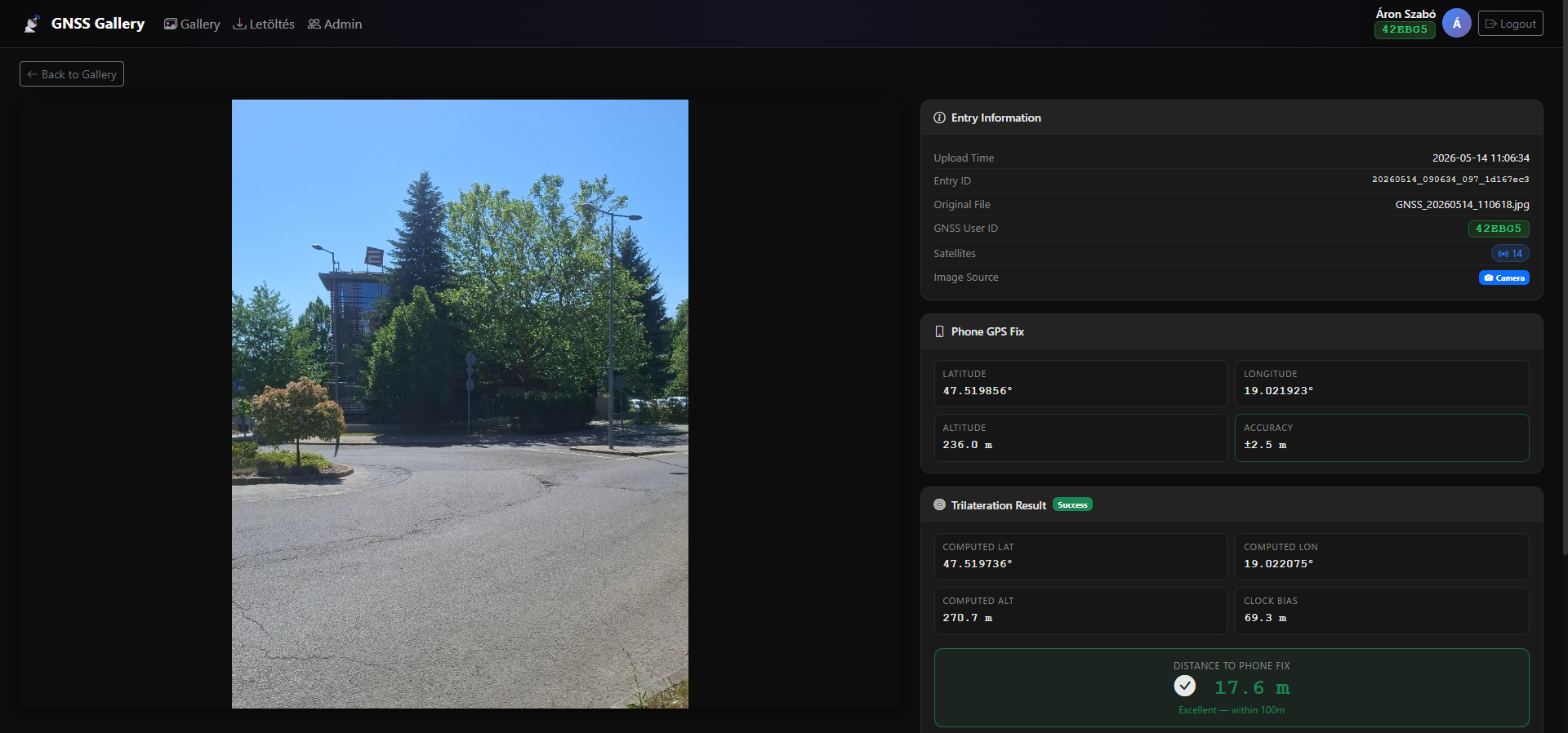
A PoC (Proof-of-Concept) portal has been created that stores submitted photos and verifies all cryptographic material. The authentic date/time and position are re-calculated based on the E1-B raw data and also distance from non-authentic RTK position is computed. The user identification is based on eIDAS-compliant service. The signature creation is based on eIDAS-compliant CAdES creation service and on C2PA creation service.