


Objectives of the service
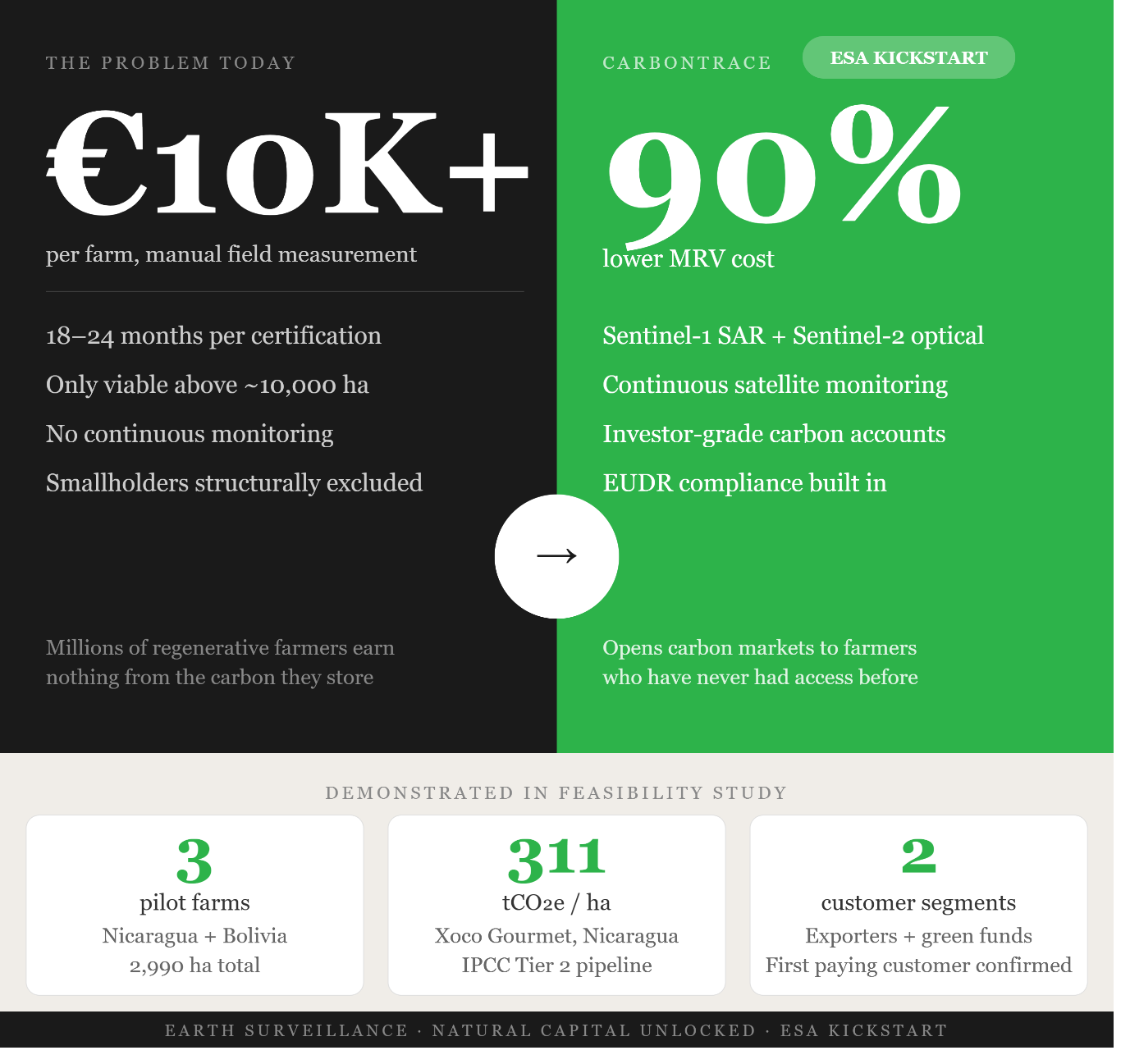
Millions of smallholder farmers in tropical Latin America practise regenerative agroforestry — growing cacao, coffee, and hardwood trees in mixed systems that store significant amounts of carbon. Yet virtually none of them earn a single euro from it. The reason is simple: measuring carbon the traditional way costs upwards of €10,000 per farm and takes up to two years. For most farmers, that makes carbon markets financially out of reach.
CarbonTrace changes the economics. Using ESA satellite data, the service monitors carbon storage across farm plots month by month, and produces the verified records that carbon markets and ESG investors require, at a fraction of the cost of conventional methods.
For agroforestry exporters such as cacao and coffee producers, CarbonTrace integrates carbon monitoring directly into existing EU Deforestation Regulation (EUDR) compliance workflows — meaning farmers document their carbon at the same time they document their supply chain, with no additional field work required.
For green investment funds, CarbonTrace turns portfolio-wide carbon data into investor-grade reporting that was previously too expensive to produce at scale.
The ESA KickStart has demonstrated the service concept across pilot farms in Nicaragua and Bolivia, confirming that satellite-derived carbon monitoring is both technically feasible and commercially relevant.
Users and their needs
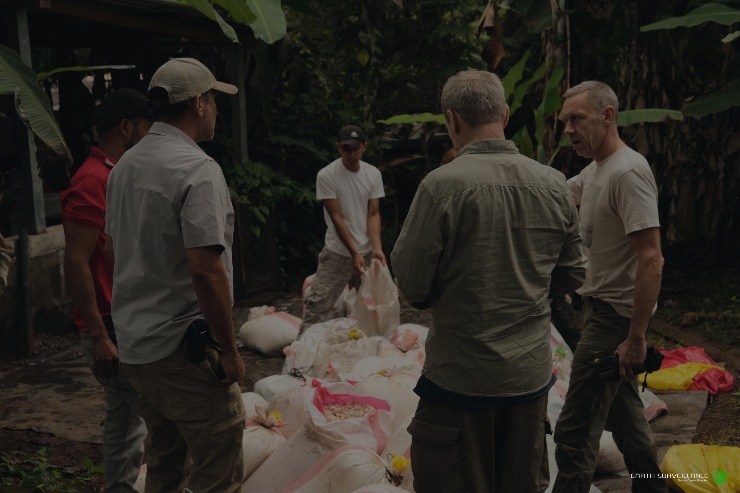
CarbonTrace serves two distinct user segments, both engaged as active pilots during the KickStart.
Agroforestry producer/exporters: Cacao and coffee producers operating regenerative mixed-canopy farms. Their immediate need is EU Deforestation Regulation compliance, which requires documented proof that commodities are deforestation-free. CarbonTrace delivers this documentation via satellite, and registers carbon data simultaneously turning a compliance cost into a potential revenue stream. Pilot user: Xoco Gourmet, Nicaragua, a confirmed paying customer.

Green investment funds: Impact funds investing in portfolios of regenerative agricultural land across Latin America. Their need is investor-grade ESG reporting that shows measurable ecological performance across a portfolio at a cost that scales with portfolio size. Producing this data through manual field methods is prohibitively expensive at the portfolio scale these funds operate. Pilot user: Capital Safi, Bolivia a fund with an ambition to bring their investment farms under monitoring.
Service/ system concept
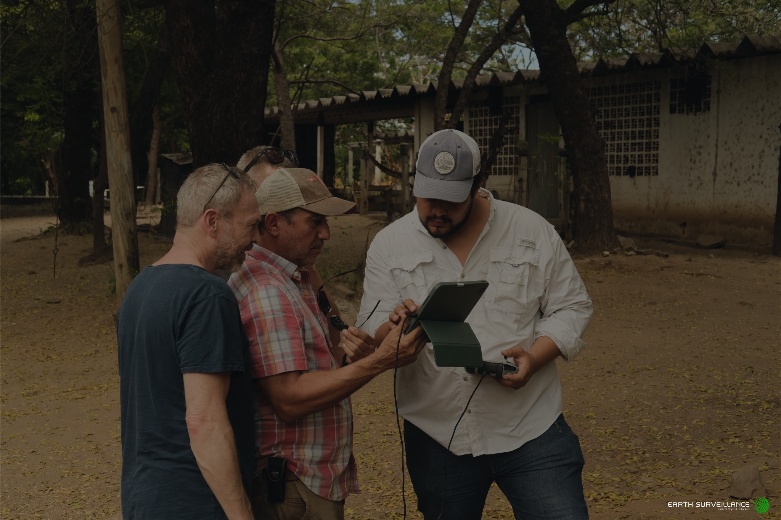
CarbonTrace delivers carbon monitoring as a subscription service. Every month, ESA satellite data is retrieved for each registered farm, optical imagery from Sentinel-2 for vegetation health, and radar imagery from Sentinel-1 for canopy structure on days when clouds make optical data impossible.
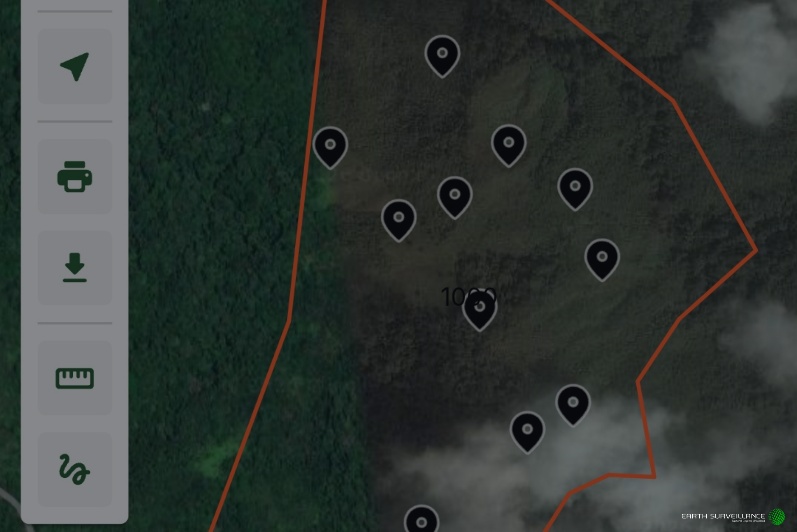
The data is processed automatically through the CarbonTrace pipeline, which derives vegetation and biomass indicators and converts them to carbon stock estimates using internationally recognised IPCC methodology. The result is a farm-level carbon account, updated ex. monthly, structured so that it can feed directly into carbon certification processes and investor reporting frameworks.
Farm operators and fund managers access their data through a dashboard. Carbon accounts are structured as e-liability records: auditable and traceable in the same way as financial statements. This makes the output credible both to carbon standard bodies and to institutional investors under CSRD and SFDR reporting frameworks.
The system was built and demonstrated in prototype during the KickStart, with live pipeline runs confirmed across farms in Nicaragua and Bolivia. The same pipeline without site-specific configuration, produced meaningful outputs across two different countries, land cover types, and user segments.
Space Added Value
CarbonTrace is built entirely on ESA Copernicus satellite data. No commercial satellite imagery is required the service runs on freely available open data.
Sentinel-2 optical imagery provides monthly snapshots of vegetation health at 10-metre resolution — detailed enough to monitor individual farm plots and track changes in canopy density over time.
Sentinel-1 radar imagery is what makes year-round tropical monitoring possible. Cloud cover in Nicaragua and Bolivia renders optical satellites unusable for four to six months each year. In Bolivia, 2024 drought and fire smoke made the situation even more severe. Sentinel-1 penetrates cloud and smoke completely providing uninterrupted canopy monitoring regardless of season. This is not an enhancement; it is a structural requirement. No ground-based alternative replicates it.
ESA's CCI Biomass dataset provides the historical carbon baseline from 2020, the reference date required by the EUDR enabling retroactive carbon stock estimation without additional field surveys.
Together, these three ESA assets replace what would otherwise require annual field expeditions to remote tropical farms. Monitoring frequency increases from once a year to monthly. Cost drops by an estimated 90%. The satellite is not a tool in the CarbonTrace service. It is the service.
Current Status
T
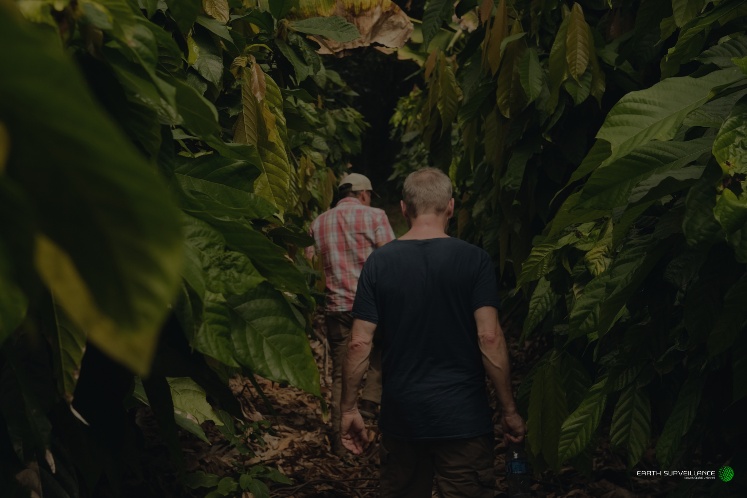
he ESA KickStart is complete. The CarbonTrace pipeline has been demonstrated end-to-end across three pilot farms: Xoco Gourmet in Nicaragua and two Capital Safi portfolio farms in Bolivia.
Satellite data has been ingested and processed for all sites. A live Bolivia pipeline run in April 2026 confirmed full data retrieval, vegetation index derivation, and AI-assisted analysis across 1,365 ha with no site-specific configuration. Preliminary carbon stock estimates have been produced for the Xoco pilot farm 311.5 tCO₂e/ha, within the expected range for established cacao-hardwood agroforestry and consistent with the field species inventory collected on site in March 2026. Xoco Gourmet is a confirmed paying customer. Capital Safi has confirmed intent to participate in a follow-on phase.
