

“We know what the problems are and we know how to solve them. All we need is unified action.” Few voices carry greater authority on the state of our planet than Sir David Attenborough, who celebrated his 100th birthday this week, a fitting time therefore for ESA’s Business Applications and Space Solutions (BASS) team to bring key stakeholders from across Europe together at ESTEC in the Netherlands for the BASS Water Day.
The event provided an opportunity to address some of the most pressing global water challenges - including water scarcity, water pollution, climate change, and growing resource pressures – while showcasing the wide range of innovative space-enabled solutions being developed through BASS projects. The event also marked the opening of the new Digitalisation of the Water Sector call, inviting proposals for water-related innovations for proof-of-concept studies and pilot projects.
 The statistics around water are stark. According to the United Nations, roughly half the world’s population face severe water scarcity for at least part of the year, 2.1bn people live without access to clean drinking water and 3.5bn do not have access to safely managed sanitation. All this against a backdrop of increased demand, diminishing supply and increased frequency and severity of droughts and floods as a result of climate change.
The day was organised by Beatrice Barresi, Senior Sustainability Officer for ESA and Bioeconomy lead at BASS, who set the scene for the day with her opening remarks. Rita Rinaldo, Head of Applications, Studies and Projects Division at ESA, followed with a welcome address where she outlined the important role space has to play in the future of water management.
“Satellites offer an unparalleled view of our planet, enabling us to observe and monitor not only water but all natural habitats, and contribute to sustainable and resilient life on Earth in many ways” said Ms Rinaldo. She also outlined the contribution of BASS which has so far invested almost €200 million in successful projects delivering tangible green impact. The BASS programme has supported companies in delivering innovative and ambitious business models that have led to the creation of 1,649 partnerships across multiple sectors, helping drive innovation to address some of the world’s most pressing challenges - including those linked to water.
Collaboration and shared action emerged as key themes throughout the event, building on discussions held during the Bioeconomy Task Force meeting the previous day. “The importance of cross- sector collaboration has motivated us to engage with key stakeholders and market leaders” continued Ms Rinaldo. “The call on Digitalisation of the Water Sector has been shaped through partnerships with the members of the Bioeconomy Task Force, covering the needs expressed by key players in several industrial sectors.”
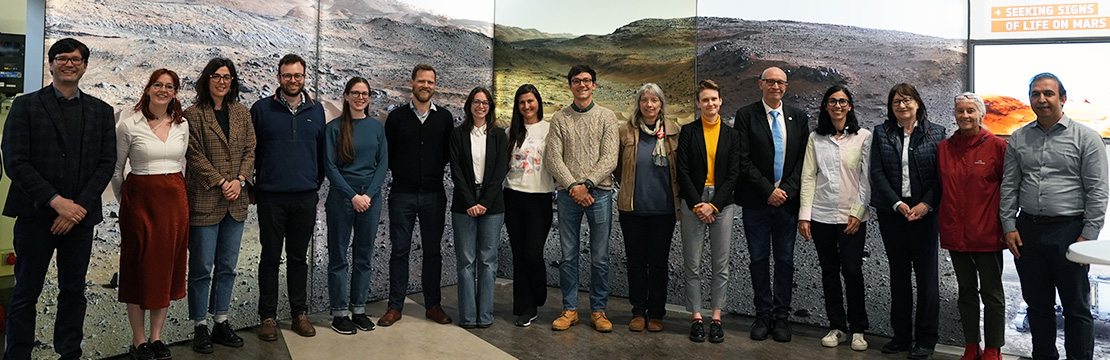
This commitment to partnership working was reflected in the diversity of participants and panellists, who included representatives from industry, city authorities, utilities, research organisations, environmental groups and international networks.
Designed to encourage discussion and collaboration, the programme for the day featured five panel sessions focused on the sector’s most urgent challenges and the potential role of space-enabled solutions in addressing them. The opening session, Securing Sustainable Water, focused on challenges facing agriculture and forestry. Marion Karmann, Senior Research Relations Manager at FSC International, highlighted the close relationship between forests and freshwater systems, saying
“With 75% of accessible fresh water sources coming from forested land, we need to maintain and conserve our forests as a priority.”
According to UN data, agriculture accounts for around 70% of global freshwater withdrawals. ESA BASS is currently supporting a wide range of agriculture-related projects aimed at reducing water consumption and improving sustainability through innovations in irrigation, pesticide management and soil monitoring.

The second panel, New Thinking on Water Resilience, explored the challenges facing water infrastructure and supply systems. Participants highlighted the lack of reliable and integrated data as a major barrier to improving resilience and ensuring safe, continuous access to water services. “Water is a service that must be provided in the right volume, of the right quality, at the right time and at a fair price across the world,” said Andrea Rubini from Water Europe. This view was echoed by fellow panellists Julie Marechal Perkins from Global Water Operators’ Partnerships Alliance and Georgios Sachinis from EYDAP, who discussed the importance of stronger coordination and consolidation of water utilities in countries facing the highest risks of water scarcity.
While the panels highlighted the scale of the challenges ahead, the event also showcased a wide range of innovations being developed to address them. During the networking lunch, participants had the opportunity to meet companies contributing to the event’s poster session and discuss projects covering areas such as water monitoring, environmental intelligence, infrastructure resilience and sustainable resource management.
The afternoon programme featured three further panel discussions covering Scaling Innovation in Cities, Unlocking New Sources of Finance for the Water Sector, and Protecting our Oceans. Across all sessions, participants returned to common themes: the importance of data-driven decision-making, the need for collaboration across sectors and borders, and the growing role of innovation in supporting more resilient and sustainable water systems.
Closing the event, Nick Appleyard, Head of ESA’s new ACCESS programme, said “Water is essential to life on Earth and the challenges – not enough water, too much water, and water quality – are increasing. This is the first Water Day we have held at ESA and I hope it will be the first of many, as we work together in looking to space to find innovative solutions to these challenges.”
Dr Appleyard continued “Our Digitalisation of the Water Sector call opens today and I hope that many of you here will be inspired to submit your proposal over the coming weeks.”
Read more about the Digitalisation of the Water Sector Call
Sign up for our Bioeconomy Bulletin