

Syncsense
Denmark
Space technology driving success in the Carbon Credit market
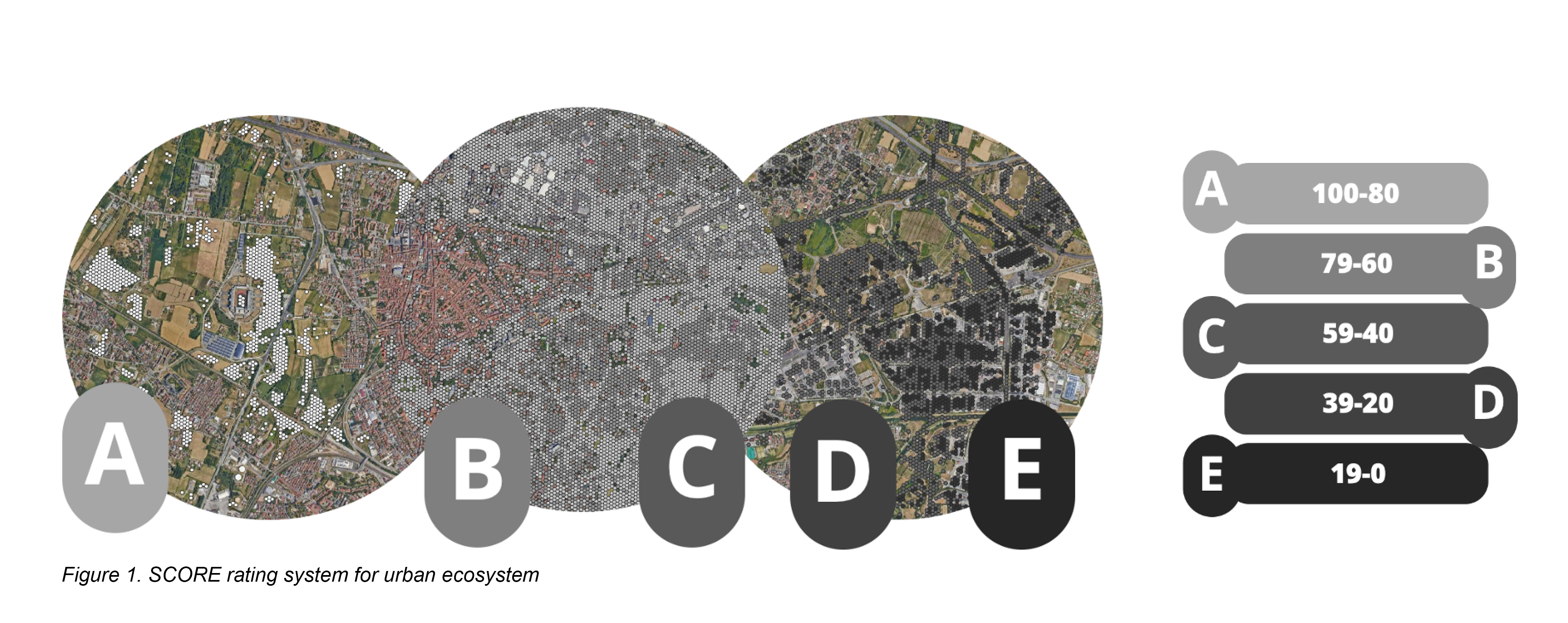
The Voluntary Carbon Market (VCM) relies on transparency and trust to maintain the value and profitability of carbon projects for stakeholders. In recent years, the quality of ‘carbon credits’ has been called into question, resulting in the emergence of carbon rating agencies who conduct impartial evaluations of projects and credits. Scale for Carbon Organic Resilient Ethereal (SCORE) is a satellite-based rating service which supports the entire lifecycle of carbon projects, from identifying areas with potential to generate lasting carbon impact to ongoing evaluation and monitoring. The SCORE study was developed by Uptoearth GmbH under ESA’s Business Applications and Space Solutions (BASS) programme and focuses on nature-based projects, revolutionising carbon-ratings with science-driven, reliable solutions for agricultural, coastal and urban areas.
SCORE addresses the needs of both the supply and sales sectors of the VCM, including public and private carbon project developers, carbon credit marketplaces and brokers. Areas are classified based on their storage capacity: those already at maximum capacity, where conservation is recommended, and those at risk, where restoration is needed. SCORE not only generates a rating of the environmental impact quality of projects but utilises past, present and future trends to forecast, advise and plan how to increase the value and quality of carbon projects over time, reducing the risk of downgrading. This level of detail enables users to identify the most reliable, impactful and profitable projects.
Embedding satellite technology throughout reduces the need for costly consultancy and localised assessments, providing a scalable and cost-efficient solution to managing and evaluating carbon projects. Ongoing monitoring and assessment enhance the credibility of the carbon market, reassuring investors that projects are not only delivering profits but also providing environmental and societal benefits.
During the study, UTE developed proof of concept (POC)s for each ecosystem: a forested area in Brazil, a wheatbelt in an agricultural area of Western Australia, the urban and peri-urban area of Padova City, Italy and a coastal area in Ischia Island, Italy. UTE consulted champion users to ensure the key VCM stakeholders were empowered to start and manage carbon projects, including work with insurers to de-risk carbon projects and improve their profitability.
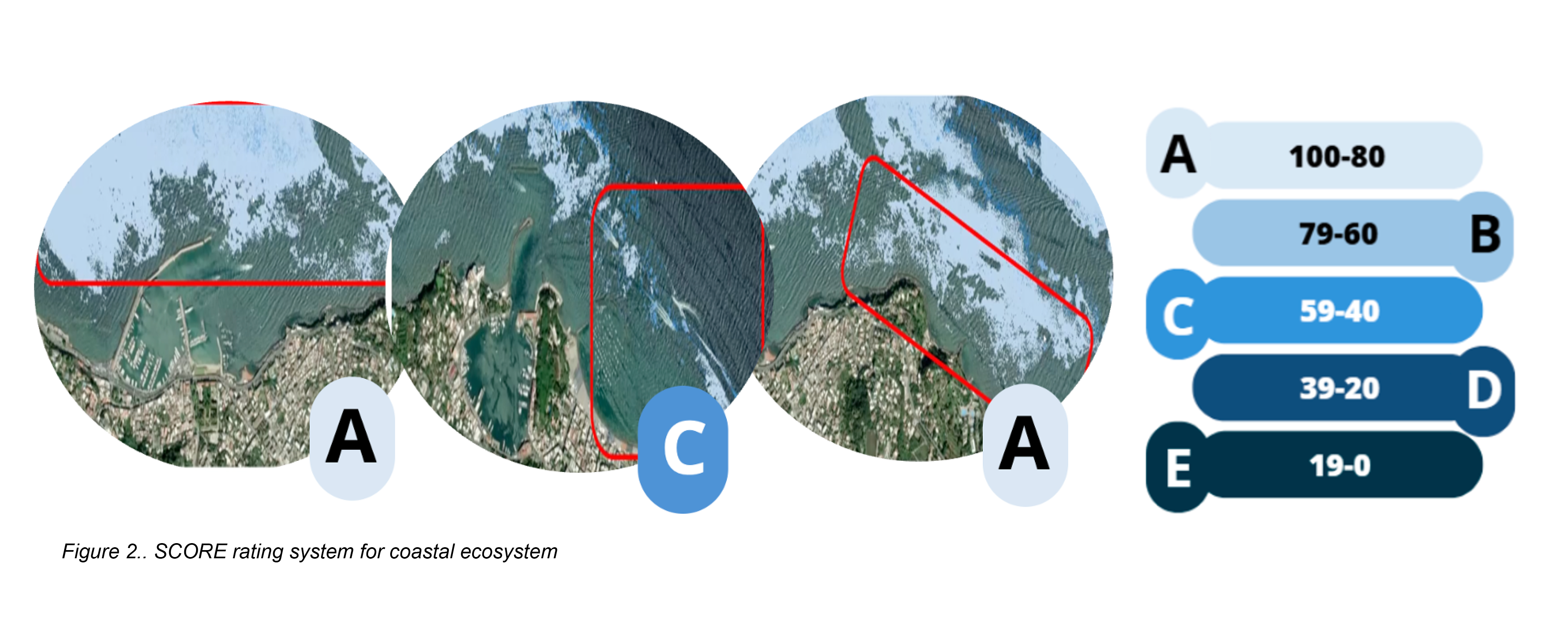
SCORE integrates satellite-based Earth observation (EO) assets with environmental analysis, and simulation tools to create comprehensive, easily accessible maps and reports for diverse users. These are tailored to each ecosystem and understandable to experts and non-experts alike. Leveraging advanced EO data ensures continuous, reliable monitoring of land use, vegetation health, biomass and carbon sequestration. SCORE exceeds non-satellite methodologies as it incorporates temporal data from historical satellite archives with frequent revisits of modern satellites to provide up-to-date insights, offering forecasts and simulating future scenarios to manage risk. The robust rating service enables users to enhance project performance, reduce risks, and drive investment in impactful climate solutions.
“We are pleased to support Uptoearth in this study” said Ana Raposo, Business Applications and Partnerships Officer at ESA. “The SCORE service has achieved commercial, societal and environmental success at an early stage, encouraging investment in carbon projects, supporting climate resilience and impactful projects”
“Carbon removals are not just an option — they are a vital ally, alongside decarbonisation, in reaching net zero. Yet before questioning the quality of nature-based carbon credits, we must first ask a deeper question: is this massive global investment truly worthwhile? In this moment of uncertainty, SCORE was created to bring clarity — harnessing the power of satellite data to strengthen Monitoring, Reporting and Verification (MRV) and to ensure that every effort counts towards a more sustainable future” said Filippo Iodice, CEO of Uptoearth GmbH.
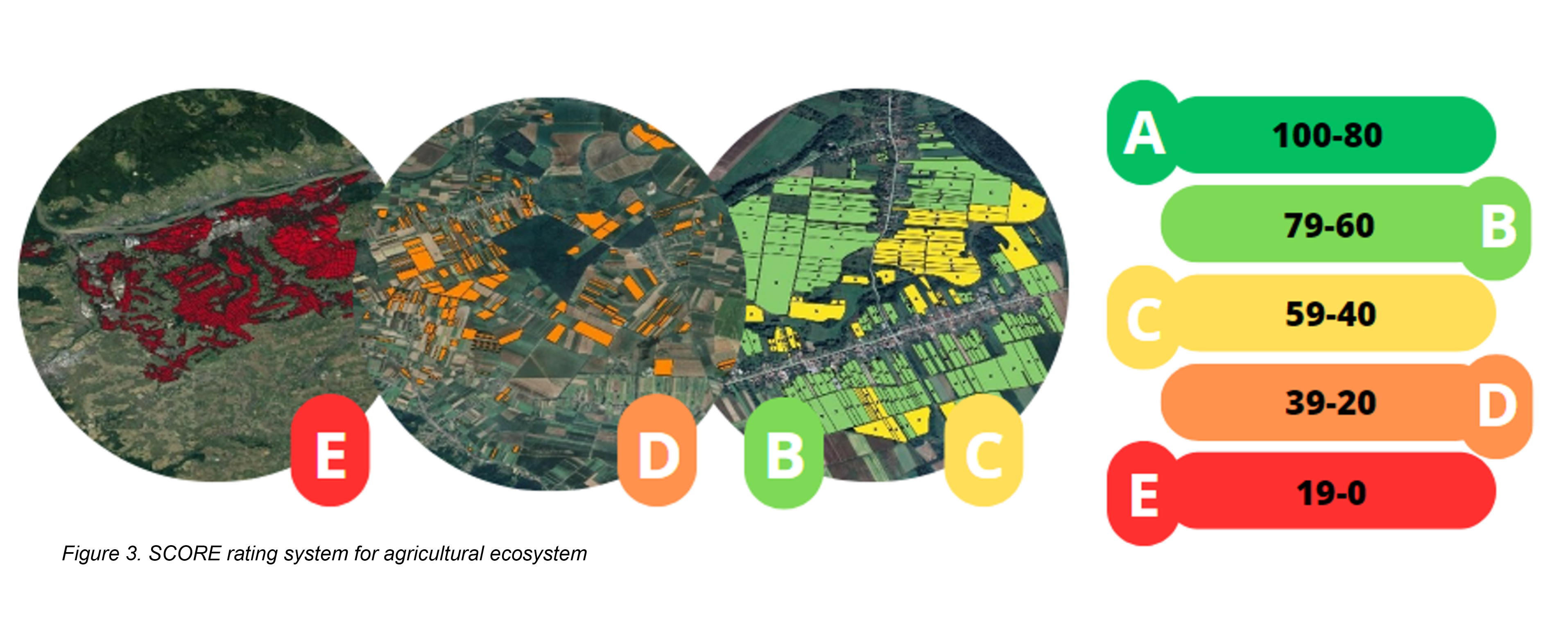
The POCs successfully showed high levels of accuracy against ground truth data, and results were validated by customers and at leading conferences. This success has resulted in partnership agreements with WE2Sure and the Stoic Foundation and four new service contracts, generating over €56,100 from SCORE’s intermediate products, have been signed. UTE are now working on two more demos, one in the Balearic Islands, Spain, and another one in Sardinia, Italy, and are launching a marketing campaign to scale the service.
Posted to Hero article section
Posted to Hero article section
“The Time for Cities” – reflecting on Smart City Expo World Congress in Barcelona
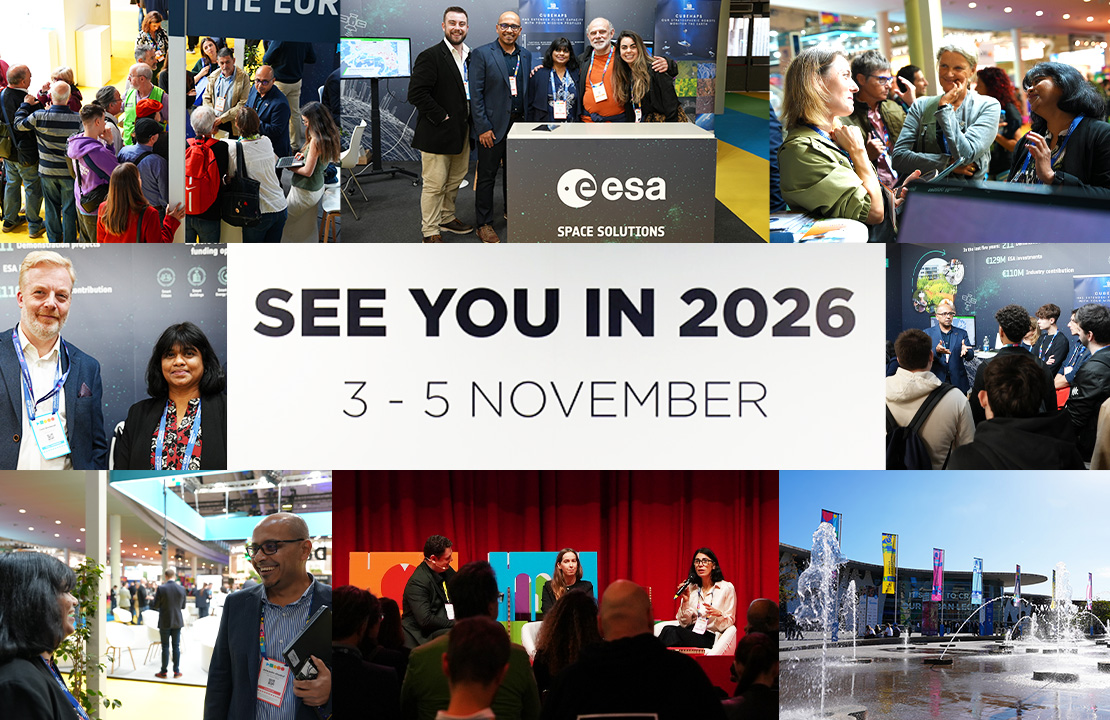
ESA’s Business Applications and Space Solutions (BASS) team had a busy week in Barcelona recently, showcasing how space technologies can drive innovation in smart and green cities at Smart City Expo World Congress (SCEWC), the largest event of its kind in Europe.
Space technologies, assets and data are playing an increasingly important role in helping city leaders address the multiple challenges they face, from air quality and traffic management to infrastructure development and maintenance, not to mention health, education and general wellbeing or city residents. SCEWC was a unique opportunity to engage with cities and tech companies from around the world, to share experiences and best practice, and to showcase the potential of space in improving our urban spaces.
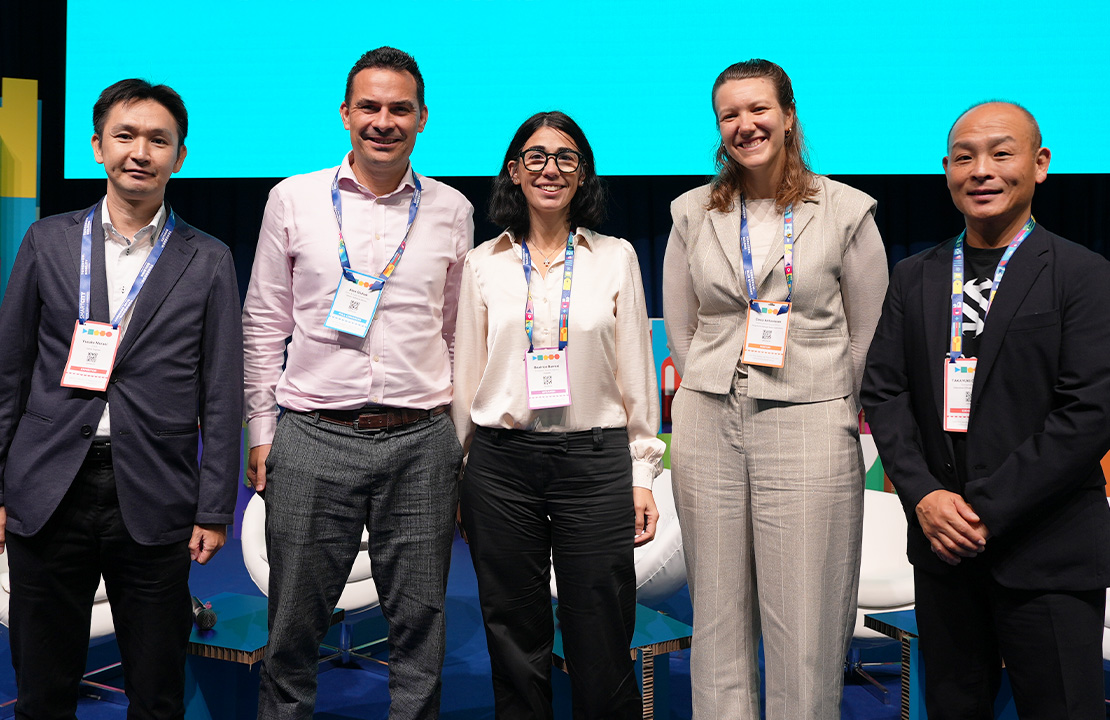
Pictured from left to right: Yusuke Muraki (Advisor to the Directors at JAXA), Alex Gluhak (Senior Technical Advisor at OASC), Beatrice Barresi (Senior Sustainable Applications Officer at ESA), Coco Antonissen (Program Manager for Space Applications at NSO), and Takayuki Odawara (Executive Officer at Synspective Inc).
Over the past 10 years, BASS has invested more than €33 million to boost almost 70 Smart Cities-related activities using space technologies and data. This year at SCEWC, the BASS stand hosted some of those business partners whose projects have been supported by the BASS programme, including:
- The Leomanni brothers, Luca and Simone Leomanni, from Social Tech Projects in Denmark, with their project that monitors the condition and safety of roads and cycle lanes using automated AI algorithms;
- Stefan Beck from greenventory, a high-tech startup from Freiburg, Germany that provides cities the ability to achieving the energy transition by offering the decision-making and data basis that enables forward-looking planning of energy systems;
- Victor Miherea from Stratobotic, an innovative startup based in Turin, Italy that focuses on the design of an innovative low-cost and low-latency micro-platform that works in constellations and swarms to offer various services using Earth Observation and Satellite Communication technologies;
- Layth Sahib from Spatial Business Integration GmbH in Darmstadt, Germany, whose Blue 4 Green project with BASS helps create a greener future for cities by enhancing the resilience and adaptive capacity of urban green spaces.
Simone Leomanni, when asked about their journey with ESA BASS, said: “We were first incubated in Denmark and then continued our journey with the ESA BASS programme. Being here at the booth has led a lot of great connections, potential partners, and future collaborations.”
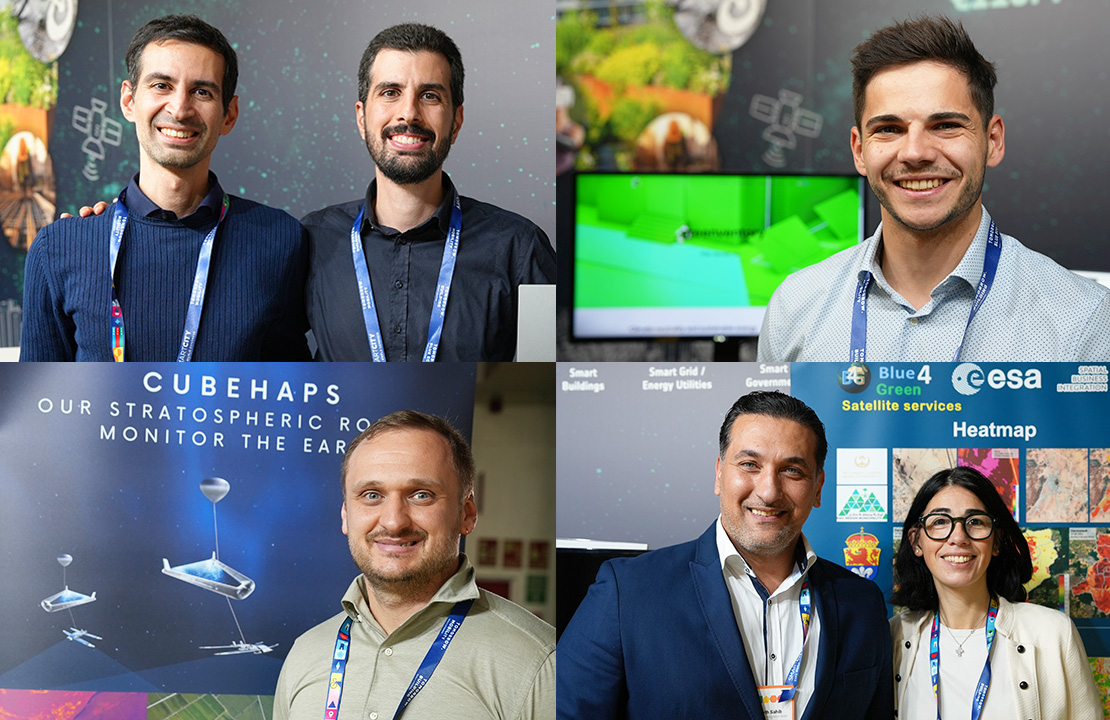
Pictured clockwise from top left: Luca Leomanni and Simone Leomanni (Social Tech Projects), Stefan Beck (greenventory), Victor Miherea (Stratobotic), and Layth Sahib (Spatial Business Integration GmbH) with Beatrice Barresi (Senior Sustainable Applications Officer at ESA).
During the three days in Barcelona, the BASS team spoke to many individuals and hosted several groups at the stand. FCC Medio Ambiente and the Asociación ONCE organised guided tours for groups of visually impaired visitors at SCEWC; one group visited the stand to understand more about how ESA BASS is delivering on one of its key objectives – using space data to create more inclusive cities. Discussions focused on how BASS is supporting European businesses to leverage Earth observation, GNSS and satcom technologies to address urban challenges including accessibility, sustainable mobility and data-driven urban design.
A group of 28 students and their supervisors from the Institut Pla de l’Estany – a public secondary and vocational education centre located in Banyoles, Catalonia offering advanced training in technology and software development – also visited the ESA Space Solutions booth. The visiting students, enrolled in the Advanced Vocational Training Programme in Cross-Platform Application Development, were keen to find out more about the role of space technologies in supporting smart cities innovation.
Representatives from the ESA BASS programme participated in panel discussions during SCEWC, including Beatrice Barresi, Senior Sustainable Applications Officer at ESA, who took part in two panel discussions, during which she spoke about how satellite assets, technology and data are helping build smart, resilient cities
“It is our second year at SCEWC and we are more excited than ever to be here,” said Mrs Barresi. “It is a fantastic opportunity to connect with cities, expand the Space for Smart and Green Cities Task Force and to better understand their needs and challenges. We are also here to meet companies that are leveraging space and other cutting-edge technologies to help cities overcome these challenges and to grow commercially and expand their market impact. We will definitely be back next year!”
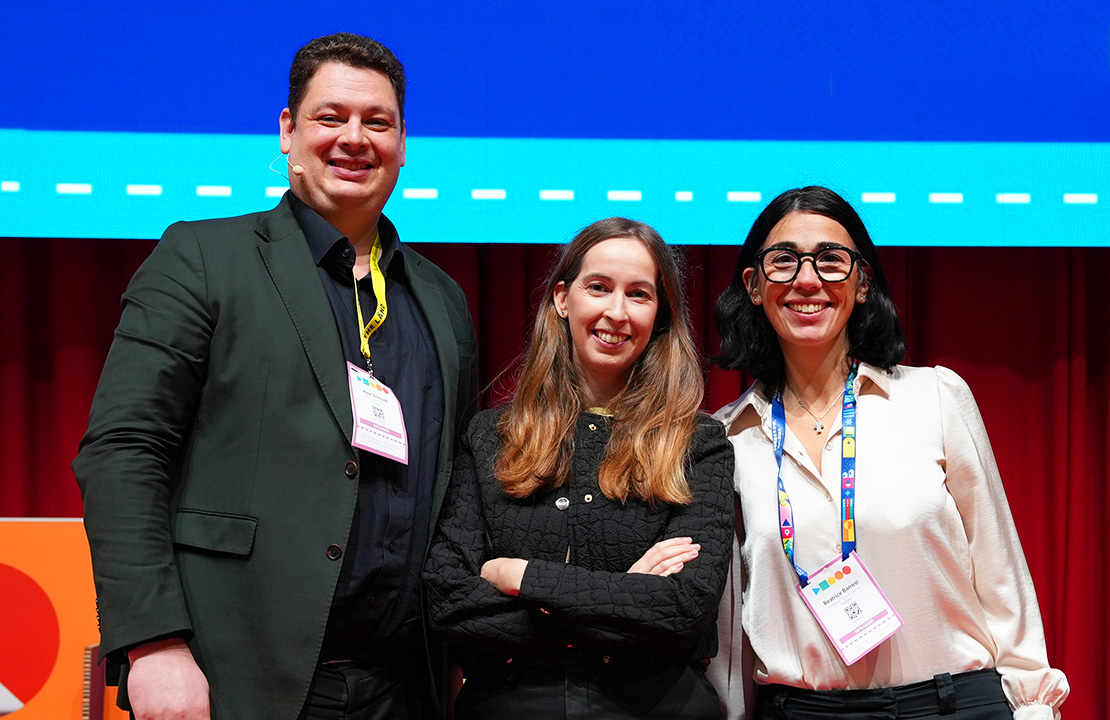
Pictured from left to right: Alexander Schmidt (CEO of BABLE Smart Cities), Roser Roca (Managing Director & CEO of Airbus GeoTech), and Beatrice Barresi (Senior Sustainable Applications Officer at ESA).
Nil Angli, Maritime Lead for ESA BASS, took part in the panel: ‘Cybersecurity Without Borders: Securing Smart Ports in a Hyper-Connected Global Trade Ecosystem.’ This session was a fascinating discussion centred around the digitisation of ports and the adoption of smart technologies such as AI, IoT, digital twins and autonomous systems, which can create enormous efficiencies but also introduce new vulnerabilities. The panellists shared their thoughts on regional and cross-continental strategies to protect critical port infrastructure from cyber threats that have the potential to cripple global supply chains.
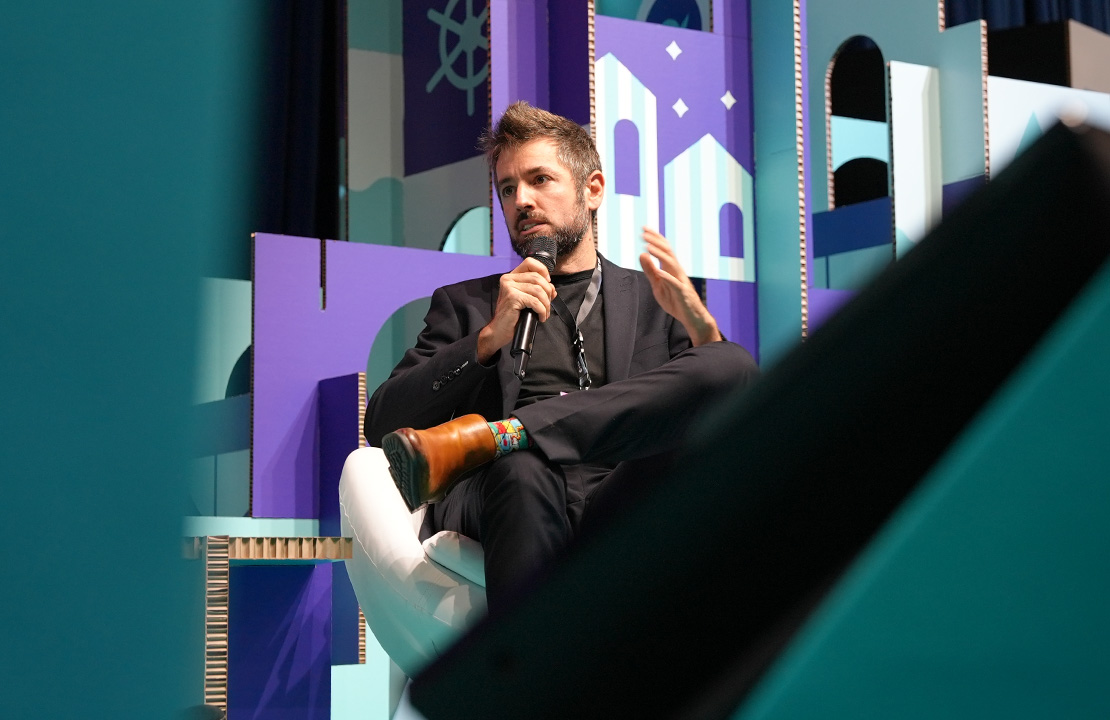
Nil Angli (Maritime Lead for ESA BASS) speaking during the ‘Cybersecurity Without Borders: Securing Smart Ports in a Hyper-Connected Global Trade Ecosystem’ panel on the Tomorrow. Blue Economy congress stage.
With city leaders seeking to keep citizens at the forefront of their decisions as they address multiple technical, financial and environmental challenges, developing business applications that prioritise inclusiveness in our cities is vital. Among the many visitors to the stand were representatives from cities from across Europe - including some of the Smart and Green Cities Task Force members – as well as tech developers and business leaders. These included a Spanish Chamber of Commerce delegation, who discussed potential collaboration pathways to support dual-use innovation, SME acceleration, and investment readiness in the space-enabled urban solutions sector.
Driving change forward in our cities and urban spaces is vital, and pairing space assets and data with next generation technologies such as AI, digital twins and intelligent automation is already helping to develop nature-based solutions and regenerative by-design models which are defining clean, efficient and inclusive urban spaces for future generations to live and work. We are already looking forward to the conversations we will have and the connections we will make in Barcelona next year.
Community reference
Posted to Hero article section
Posted to Hero article section