ESA title

From Cornwall to Scotland - UK's role in space business takes centre stage
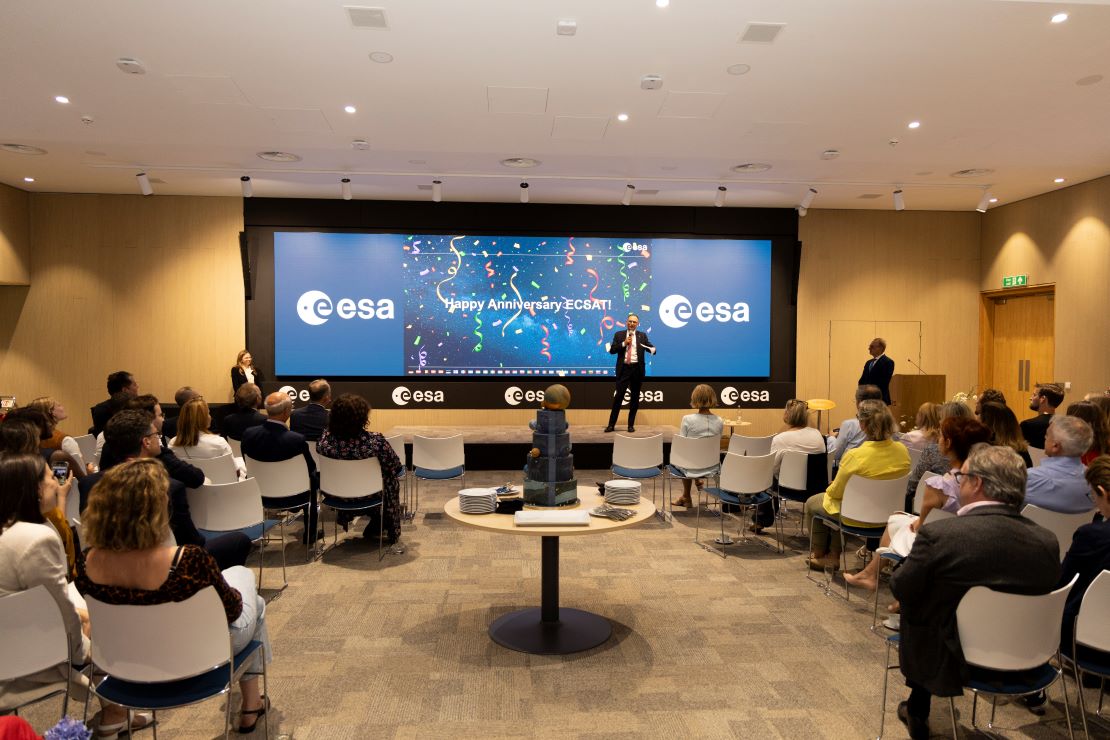
The UK was in the spotlight last week as the UK Space Conference took place in Manchester. Always an important date in the space calendar, this year was no exception with astronauts, enthusiasts, space tech experts, engineers, researchers and many more converging on the city for the biennial event.  The two-day conference was part of a busy week in the UK for ESA’s Director General Josef Aschbacher, who also celebrated the tenth birthday of ESA’s European Centre for Space Applications and Telecommunications (ECSAT) on Tuesday. 
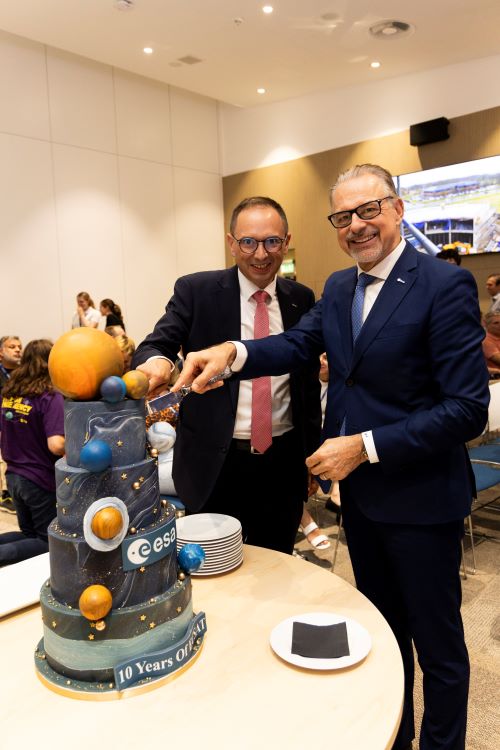
ESA’s ECSAT site is one of ESA’s best kept secrets. Named after Roy Gibson BEM, the first Director General of ESA, and based at Harwell in Oxfordshire, it is small but perfectly formed and is expanding rapidly. It sits at the gateway of the Oxford-Cambridge Arc, a world-leading centre of excellence for innovation and technology, and with the UK driving commercialisation in the space sector, it is no coincidence that it is the home of ESA’s largest commercial programme, Business Applications and Space Solutions (BASS).  

The UK Space Agency is the biggest investor in BASS, supporting more than 90 completed projects to date with many more ongoing across multiple sectors, driven by companies from all corners of the UK. In total, ESA BASS has invested 64 million euros in the UK, matched by company co-funding to total nearly 130 million euros in UK business since 2010. These investments have created thousands of jobs (80% of those in the UK) and projected cumulated sales over three years total more than 960 million euros. From monitoring invasive aquatic plants in freshwater bodies (Oxford), to helping smallholders around the world tap into lucrative supply chains for coffee, cocoa and other commodities (Scotland), developing groundbreaking portable 3D scanning equipment for early fracture detection (Oxford), and providing remote management of high value assets and infrastructure (Cornwall), businesses across the UK are generating pioneering solutions using space-based technologies to improve life on Earth. 

Returning to Manchester, ESA had a large presence at the heart of the conference and colleagues from BASS, Earth observation and telecommunications had many fruitful conversations about how the application of space-based technologies is playing an increasingly vital role in solving some of Earth’s most pressing issues, especially around sustainability and the green transition. ESA BASS’ presence extended beyond the ESA pavilion, with ESA ambassadors and project companies exhibiting and visiting individually and as part of the growing space clusters in the UK regions.  

In his keynote speech at the conference, Josef Aschbacher reiterated the significance of the UK in the space sector and outlined the potential for space to supercharge the UK’s economy.  

“ESA will work with Member States, the European Commission, and international partners to harness space for the betterment of life on Earth” said Mr Aschbacher. “The decisions made at the ESA Council Meeting in November will ensure a more secure and prosperous future for all Europeans, and the UK and its industry will play a significant role in this endeavour. The relationship between ESA and the UK is productive, mutually beneficial, and strategically important.” 

With private investment in space continuing to soar, last year European space ventures raised over 1.5 billion euro, marking a 56% increase compared to 2023. In 2024, global private investment in space grew by 20%—to 7 billion euros—compared to 2023. Over the past five years, Europe's share of global private investment in space has grown significantly, from 3% in 2019 to 22% in 2024. However, public investment in space is falling behind. In 2024, Europe captured just 10% of the global public space budget, a decrease of 5% since 2019. 

Speaking from Manchester at the UK Space Conference, Nick Appleyard, Head of ESA BASS, said “The UK’s commitment to supporting businesses is never better illustrated than at these events, as we see how they are accessing space technologies to develop innovative products that protect our planet. It has been wonderful to see so many of the companies BASS have supported here this week and to hear their plans for expansion and scale.”  
SIGN UP TO OUR MONTHLY NEWSLETTER

Community reference
Posted to Hero article section
Teaser paragraph

The UK was in the spotlight last week as the UK Space Conference took place in Manchester. Always an important date in the space calendar, this year was no exception with astronauts, enthusiasts, space tech experts, engineers, researchers and many more converging on the city for the biennial event.  The two-day conference was part of a busy week in the UK for ESA’s Director General Josef Aschbacher, who also celebrated the tenth birthday of ESA’s European Centre for Space Applications and Telecommunications (ECSAT) on Tuesday. 

ESA signs MoI with Veolia Energia Poland to accelerate sustainable development

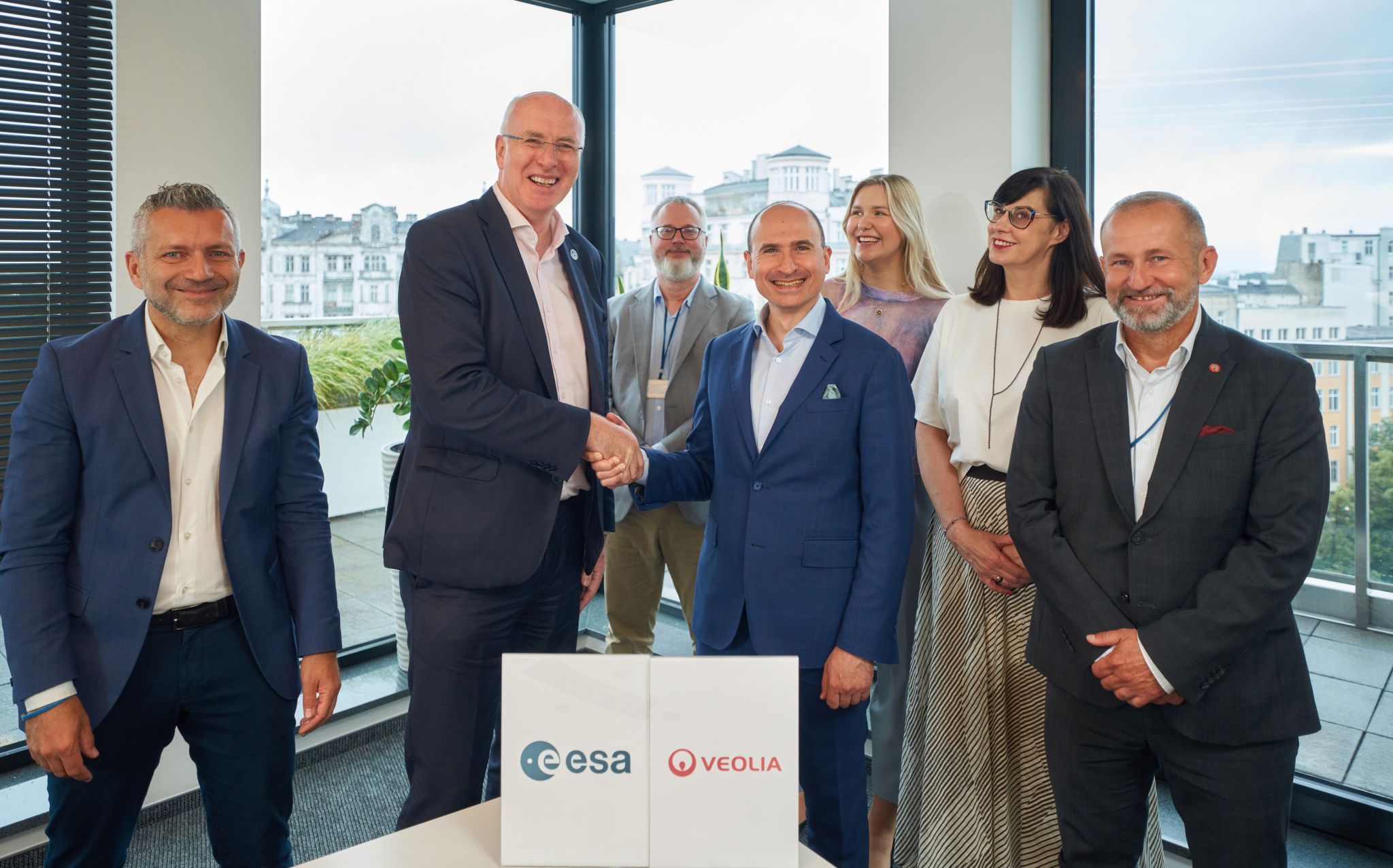
Veolia Energia Polska and the European Space Agency (ESA)’s Business Applications and Space Solutions (BASS) programme have signed a Memorandum of Intent (MOI), marking the beginning of a strategic collaboration to harness space technologies in support of sustainable development. The partnership aims to co-develop innovative solutions that accelerate decarbonisation, ecological transition, and digital transformation—particularly in the areas of energy, water, and waste management.

Through this cooperation, ESA and Veolia intend to explore the application of satellite technologies and downstream space services in sectors that are critical to the environmental resilience of European cities. The MOI outlines specific areas of joint activity, including the deployment of space-based innovations, co-organisation of initiatives, joint project promotion, and the exchange of knowledge and technical expertise.

"This collaboration introduces a new dimension in urban environmental management. ESA stands for technological excellence, while Veolia brings decades of operational know-how and a deep understanding of municipal systems. By combining these strengths, we can implement scalable, innovative, and environmentally responsible solutions," said Luiz Hanania, CEO of Veolia Poland.

Operating in Poland for over 25 years, Veolia Energia Polska currently serves 3 million customers across 123 cities and manages district heating networks in 58 of them. With 4,600 employees, the company delivers integrated services in heat production, energy efficiency, water management, and waste solutions. Its strategy is rooted in circular economy principles, sustainable development, and active support of local communities.

ESA is an intergovernmental organisation comprising 23 member states, committed to the peaceful development of space research, technology, and satellite applications. The BASS programme is a key vehicle for ESA’s engagement with industry and helps businesses from all corners of Europe to harness space technology to improve life on Earth. BASS supports the commercialisation of space-enabled services across multiple sectors including energy, transportation, agriculture, urban development and environmental protection.

"Our objective is to strengthen the resilience of cities and industries to climate-related challenges. Satellite technologies will allow us to monitor and analyse natural resources more effectively, identify energy losses, anticipate environmental risks, and optimise operational processes through the implementation of innovative technologies," emphasised Krzysztof Zamasz, Vice President of the Management Board at Veolia Poland.

Anna Kędziora-Szwagrzak, CEO of Veolia Energia Łódź, said "The cooperation between the Veolia Group and ESA is, for heating systems such as the Łódź one, a very innovative research and development area for the operation of technological infrastructure responsible for the security of the city’s supply of district heating and in this context its sustainable ecological transformation." 

“The Polish economy offers a wide range of opportunities for innovation using space technologies,” said Nick Appleyard, Head of ESA’s BASS programme. “This cooperation with VEOLIA is significant and follows a series of MOI agreements between ESA and Polish entities in recent weeks, including the City of Łódź, Łódź Special Economic Zone and the Polish New Mobility Association. We are looking forward to working closely with our Polish partners to demonstrate how satellite technologies have a key role to play in addressing infrastructure challenges across multiple sectors.”

"Space offers tremendous opportunities to accelerate decarbonisation, ecological transition, and digital transformation - especially in critical sectors like energy, water, and waste management. Our collaboration with Veolia, backed by their credible innovation roadmap and strategy, opens a new dimension for developing impactful, sustainable space applications that directly address these pressing challenges," said Davide Coppola, Head of ESA's Space Applications Initiatives Section. 

As part of the agreement, the partners plan to launch pilot projects, co-organise workshops and seminars, and collaborate on educational and awareness-raising initiatives showcasing the potential of space applications for environmental protection and urban infrastructure modernisation. Both parties also express their openness to cooperate with additional national and international stakeholders.

The MOI is valid for three years with the possibility of extension. 

Community reference
Posted to Hero article section
Teaser paragraph

Veolia Energia Polska and the European Space Agency (ESA)’s Business Applications and Space Solutions (BASS) programme have signed a Memorandum of Intent (MOI), marking the beginning of a strategic collaboration to harness space technologies in support of sustainable development. The partnership aims to co-develop innovative solutions that accelerate decarbonisation, ecological transition, and digital transformation—particularly in the areas of energy, water, and waste management.

  • Opportunity Call for Proposals (Competitive)
  • Activity Kick-start Activity
  • Opening date 09-10-2025
  • Closing date 21-11-2025

Funding Opportunity 

75% funding by the European Space Agency up to 75k EUR for each selected activity. These activities will establish commercial services integrating metaverse elements with space technologies into existing/new services and applications.

How space technology is helping bees and biodiversity

Bees are essential to life on Earth, playing a critical role in pollinating plants that sustain global ecosystems and food supply. However, habitat loss, intensive farming practices, pesticide use and climate change are causing alarming declines in our bee populations. This crisis not only poses severe ecological threats but also presents economic challenges, particularly for agricultural industries that depend heavily on pollination.

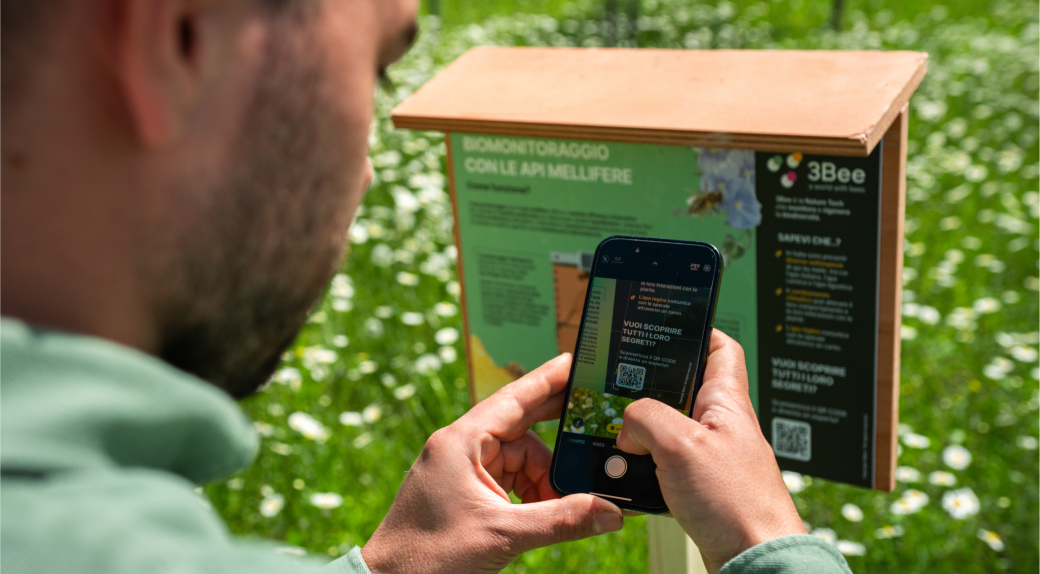
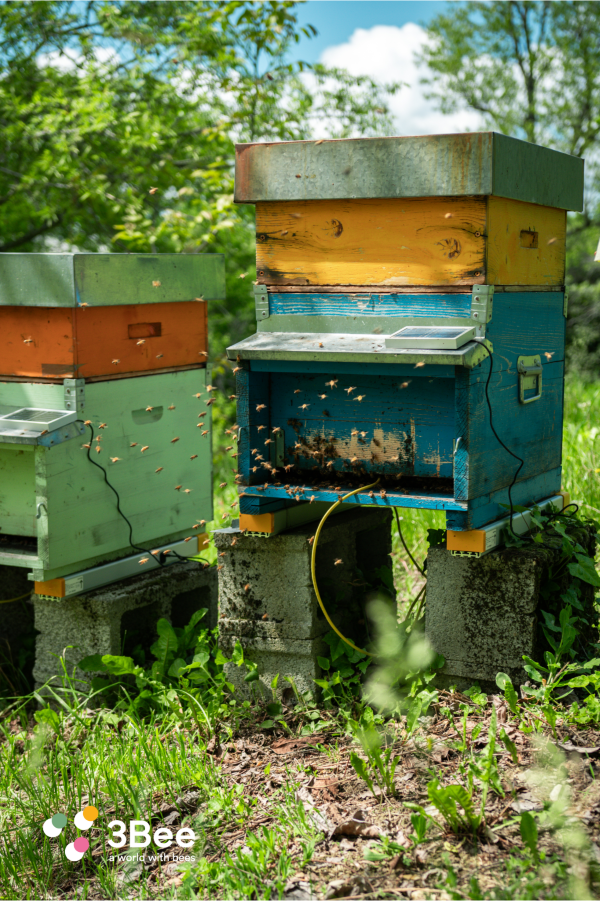
To help tackle these challenges, Italian company 3Bee Srl developed Sentinel HIVE-TECH, under ESA’s Business Applications and Space Solutions (BASS) programme. By exploiting satellite technology, Sentinel HIVE-TECH offers innovative services for beekeepers, farmers, and industries seeking to protect biodiversity, improve efficiency and future-proof their operations. Initially aimed at beekeepers and farmers, the project’s commercial success has since expanded, with 3Bee securing contracts worth one million euros across other industries, including infrastructure, energy and real estate.

Beekeeping is intrinsically tied to environmental conditions, yet traditional practices rely on trial and error. Beekeepers often face lengthy and costly efforts to locate high-nectar zones, forecast honey yields, and prevent colony starvation. In addition, many European countries have seen sharp declines in bee numbers, with severe colony losses linked to extensive pesticide use and inadequate management practices. Without proper nutrition, optimal migration routes and appropriate medical treatments, bee colony health remains at risk.
For farmers, a pollination service that places healthy beehives near to crops boosts crop quality and yield. However, fewer than 30% of farmers in Europe currently utilise pollination services, often due to the lack of an accessible, user-friendly platform to support these efforts.

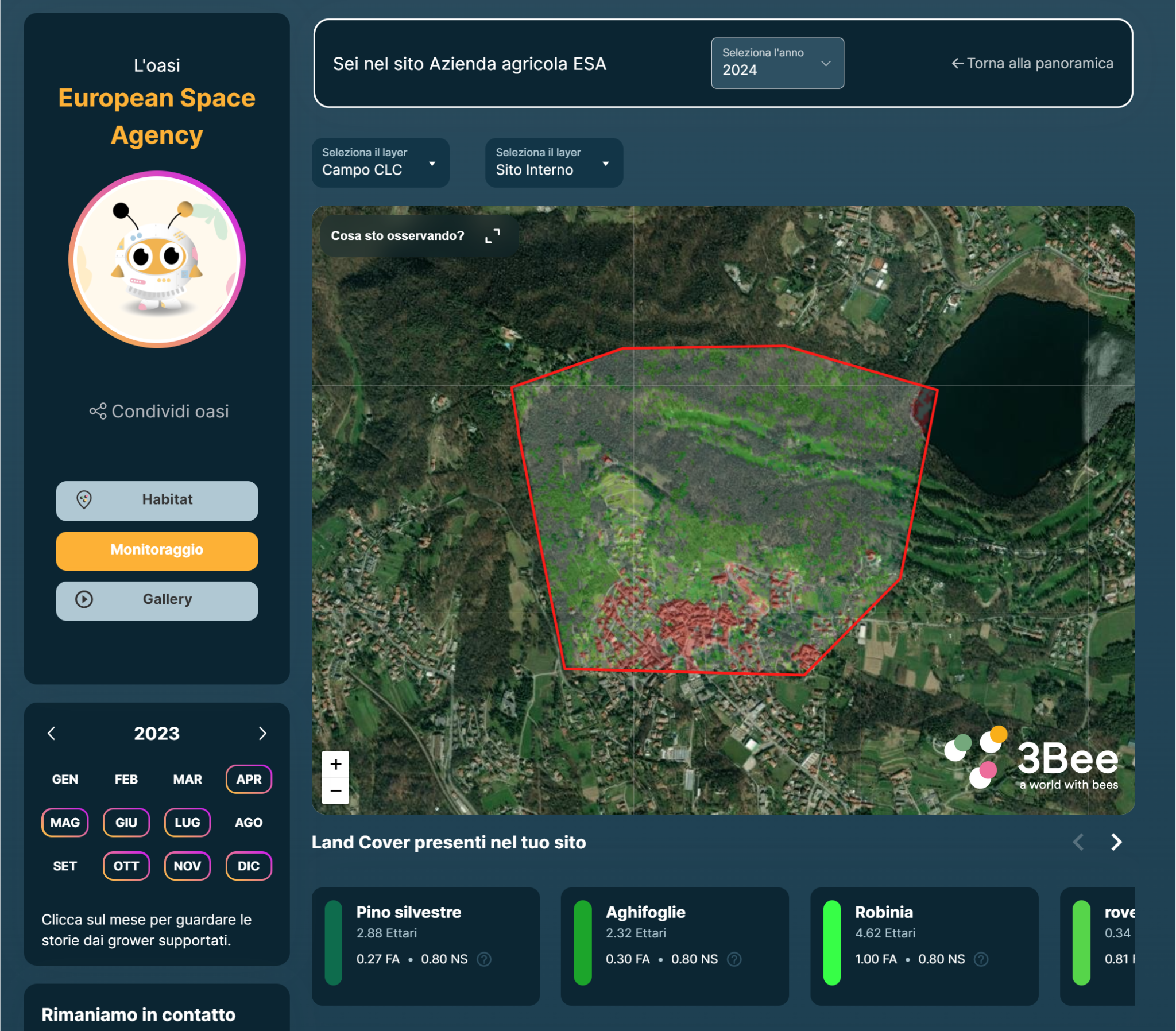
Sentinel HIVE-TECH addresses these challenges through a comprehensive pollination and biodiversity mapping platform. By integrating data from ESA Earth observation satellites, Sentinel-1 and Sentinel-2, with AI-processed information collected directly from beehives, the platform delivers accurate, real-time insights into nectar potential, flowering species, and land cover conditions.

This data is automatically processed, saving both time and resources. Beekeepers benefit by improving their practices and reducing operating costs, with tools to predict income expectations and plan hive placements effectively. Farmers gain from enhanced pollination strategies, ensuring healthy bees are positioned near crops at the right time. These services enable successful pollination, increased yields and reduced use of chemical pesticides.

Sentinel HIVE-TECH has achieved impressive commercial success with its original target customers, now monitoring 4000 beehives and 22 000 hectares of farmland. The project’s most notable achievement, however, lies in its expansion into industries outside the traditional agriculture sector.

3Bee has secured contracts worth €1 million from companies in the energy, real estate, and infrastructure sectors. These industries are leveraging Sentinel Hive-Tech to meet stringent biodiversity compliance requirements. For instance, real estate developers are using the service to ensure their projects are biodiversity-friendly by monitoring and reporting on local ecosystems, while energy companies utilise it to mitigate ecological disruption during infrastructure development.

"Sentinel HIVE-TECH demonstrates how space technology can transform biodiversity management," said Rita Rinaldo, Head of Applications, Projects and Studies Division at ESA. "By providing actionable insights, it empowers industries and individuals to safeguard pollinators and create sustainable ecosystems.”

"Thanks to our collaboration with ESA, we have integrated satellite imagery analysis into our operational workflows," said Niccolò Calandri, CEO of 3Bee. “This allows us to generate high-resolution, science-based environmental data – crucial for monitoring biodiversity, assessing climate-related risks, and supporting data-driven sustainability strategies across multiple sectors."

The scalability and cost-effectiveness of Sentinel HIVE-TECH show how space solutions can meet both ecological and regulatory needs, positioning biodiversity at the core of business strategy. Having already extended its reach beyond its original audience, it is solidifying its reputation as a pioneering solution in biodiversity management. As pollinators face increasing threats, solutions like Sentinel HIVE-TECH demonstrate the potential of space technology and innovation to protect biodiversity and support sustainable ecosystems for coming generations.

Looking ahead, 3Bee plans to expand the project’s geographic reach, refine its analytics for greater precision, and develop features tailored to new sectors and environmental challenges. As biodiversity loss accelerates, the company’s mission is clear: to make pollinator protection practical, profitable, and scalable. Powered by ESA and space innovation, Sentinel HIVE-TECH shows how technology can serve nature and support a more resilient future.

SIGN UP FOR OUR BIOECONOMY BULLETIN

Community reference
Posted to Hero article section
Teaser paragraph

Bees are essential to life on Earth, playing a critical role in pollinating plants that sustain global ecosystems and food supply. However, habitat loss, intensive farming practices, pesticide use and climate change are causing alarming declines in our bee populations. This crisis not only poses severe ecological threats but also presents economic challenges, particularly for agricultural industries that depend heavily on pollination.