ESA title

Agriculture powered by space – how geospatial data is helping shape a sustainable farming sector


“What has space got to do with agriculture?” – a commonly-asked question, according to Rita Rinaldo, Head of Applications Projects and Studies Division at ESA, speaking in London this week as part of the World Agri-Tech Innovation Summit.  In her speech to conference, Ms Rinaldo went on to outline how geospatial data is already playing a vital role in providing innovative and sustainable solutions for farmers, in a sector increasingly vulnerable to the impacts of climate change and supply chain disruption, and facing the demands of rapidly growing populations.

For ESA’s Business Applications and Space Solutions (BASS) programme, the agriculture sector has been a significant area of development for over ten years. With more than 200M EUR invested to date in almost 250 different projects, space technology in agriculture is already having a real impact on the sector. As part of ESA’s mission to demystify the use of geospatial data and satellite technologies in support of the agriculture sector, the BASS programme launched its new Agriculture Dossier this week, detailing the investment in the sector so far, showcasing successful initiatives and outlining its strategic priorities for the future.

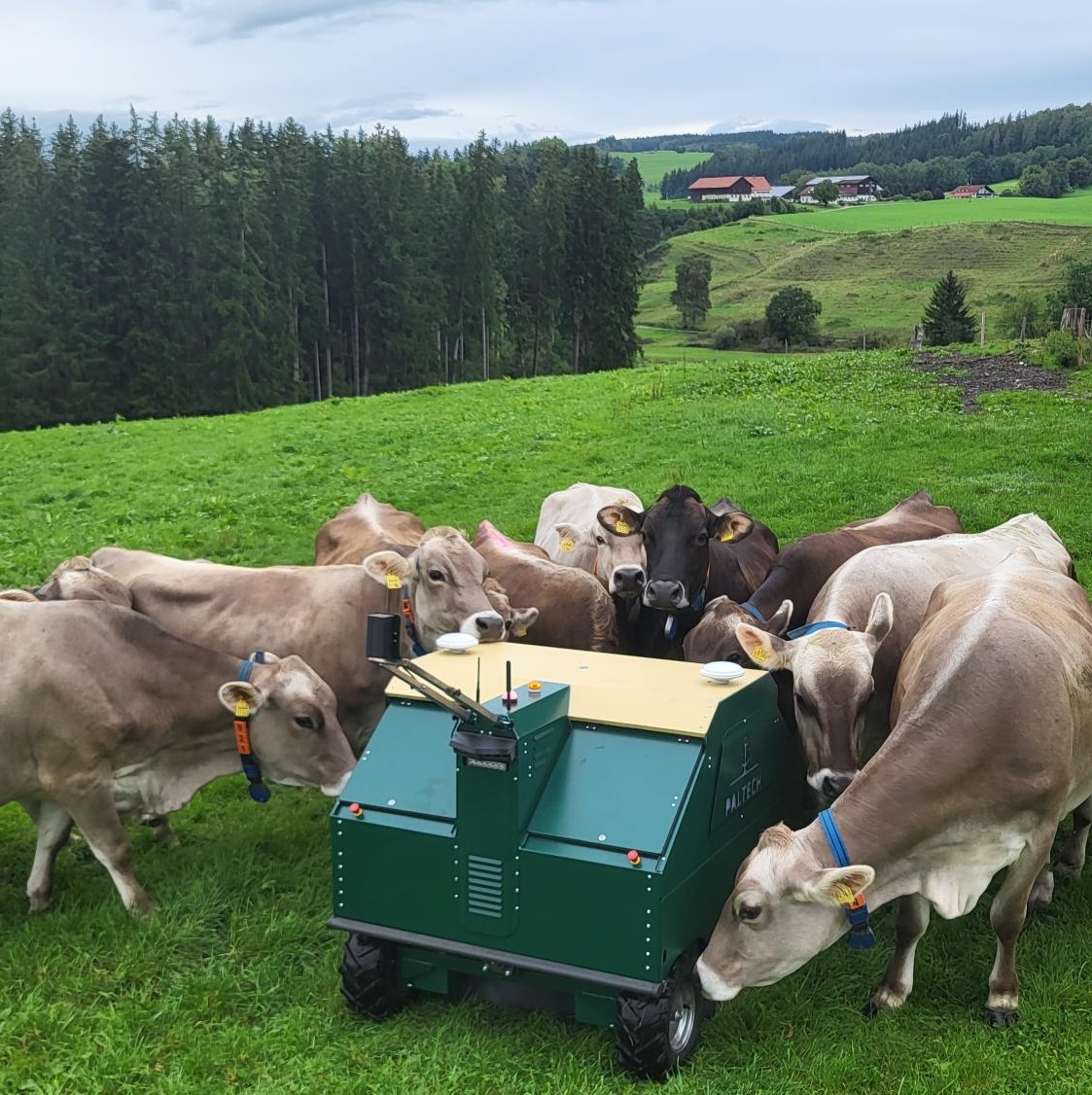
Amongst its many applications, imagery from Earth observation satellites (satEO) is helping assess crop and forest health, monitor water quality and levels, and predict the risk of extreme weather events. Satellite communications (satcom) is particularly beneficial in connecting remote locations, enabling producers and farmers to access market prices and weather forecasts. Satellite navigation systems (satnav) also have an important role to play, enhancing traceability and transparency in the supply chain and - through the use of GPS collars and IoT sensors - helping monitor livestock health, location and behaviour.

Speaking as part of the "Climate-Proof Agriculture: Tools to Manage Climate, Agronomic and Supply” panel at the London event, Ms Rinaldo explained how two key priorities are emerging in ESA’s discussions with industry and partners. The first concerns the challenges presented by unpredictable and disruptive climate events, in particular changes in precipitation levels and patterns resulting from climate change. These changes are affecting yields and margins for farmers and are having an impact on food price inflation around the world. The second relates to more progressive and incremental shifts resulting from changing climate patterns, which also have an impact on production and supply, but which can be predicted.

In both instances, access to multiple geospatial data points is key. Companies across Europe are working with ESA BASS to develop a range of platforms and systems which use this data to create relevant and usable interfaces for farmers, helping to mitigate these key challenges.

Ms Rinaldo has noticed another change in the way satellite data is being used in the sector. “Historically, we have seen geospatial data used to support precision agriculture, focusing on increasing yields, and reducing water and fertiliser use. Increasingly, these technologies are now being applied to support a more regenerative approach to agriculture, with farmers and growers keen to increase the value of the land over a longer period, focusing on soil health, circularity and sustainable practices.”

With the challenges facing farmers varying significantly from one geographical and production area to another, working in collaboration with specialist partners is key – which is where ESA’s Bioeconomy Task Force comes in. Established in 2024, it supports dialogue among key sector stakeholders to inform priority topics, where dedicated support actions are initiated. In addition, it helps to raise awareness of available space solutions that are not only commercially viable but also environmentally sustainable, mitigating some of the worst effects of climate change on agriculture and ensuring secure food supplies for growing populations in the future.

Community reference
Posted to Hero article section
Teaser paragraph

“What has space got to do with agriculture?” – a commonly-asked question, according to Rita Rinaldo, Head of Applications Projects and Studes Division at ESA, speaking in London this week as part of the World Agri-Tech Innovation Summit.  In her speech to conference, Ms Rinaldo went on to outline how geospatial data is already playing a vital role in providing innovative and sustainable solutions for farmers, in a sector increasingly vulnerable to the impacts of climate change and supply chain disruption, and facing needs of rapidly growing populations.

Showcasing Space Applications for Maritime Decarbonisation


This event is sold out.

The European Space Agency (ESA) will be hosting a free event highlighting the role of space technologies in advancing maritime decarbonisation at ESTEC in the Netherlands - the technical heart of ESA - on 19 November.

This one-day programme will present the latest developments emerging from ESA’s maritime decarbonisation call, featuring fast-pitch presentations, networking slots, and opportunities to explore future collaboration.

The agenda is structured around five key themes:

  • Digitalisation
  • Alternative Fuels and Propulsion Systems
  • Ports
  • Emissions Monitoring
  • Automation

Participants will include ports, classification societies, authorities, shipyards, ship owners, and technology and service providers.

The event will also host a short Task Force Members’ meeting to evaluate progress and identify future opportunities.

The event will provide a unique platform for knowledge exchange and collaboration at the forefront of maritime innovation.

Catering will be provided throughout the day.

How do I get there?

How to get to ESTEC

Agenda


10:00 – 10:30 | General Arrival and Registration

10:30 – 10:35 | Practical Remarks ESA

10:35 – 11:50 | Welcome and Introduction ESA

10:50 - 11:45 | Digitalisation

  • Keynote: UK Hydrographic Office (UKHO) 
  • Amphitrite
  • Toqua
  • Marine Weather Intelligence
  • Sternula
  • ESA

11:45 – 12:30 | Alternative Fuels and Propulsion Systems 

  • Keynote: International Windship Association (IWSA)
  • Albatros Digital
  • CargoKite GmbH
  • Seabound
  • ESA

12:30 – 13:35 | Networking Lunch

13:30 – 14:30 | Emissions Monitoring 

  • Keynote: European Maritime Safety Agency (EMSA)
  • MPIC-Mainz
  • BogliaTen Ltd
  • DNV AS
  • Samaero Spazio
  • Geospatial Impact
  • ESA

14:30 – 15:25 | Ports 

  • P de Valencia
  • BMT
  • RINA Consulting S.p.A.
  • TIM
  • Amelia Space Technologies
  • ESA

15:25 – 15:45 | Coffee Break

15:45 – 16:35 | Automation

  • EMSA
  • Orca AI
  • Cetasol AB
  • DeepSea Technologies
  • Subdron GmbH
  • ESA

16:35 – 16:38 | Special Announcement

16:38 – 16:43 | Closing Remarks

16:45 – 18:00 | Networking Drinks


Community reference
Posted to Hero article section
Teaser paragraph

The European Space Agency (ESA) will be hosting a free event highlighting the role of space technologies in advancing maritime decarbonisation at ESTEC in the Netherlands - the technical heart of ESA - on 19 November.

This one-day programme will present the latest developments emerging from ESA’s maritime decarbonisation call, featuring fast-pitch presentations, networking slots, and opportunities to explore future collaboration.

Satellite Data Underpins New Flood Risk Tool


Climate change is leading to an unprecedented increase in extreme rainfall events and flooding. Between 2014 and 2023, flood losses across the Nordic regions have increased by 22% and 54% of these losses have been caused by extreme rainfall, causing a challenging situation for insurance companies and policyholders. Norwegian company Mitigrate have developed a service under ESA’s Business Applications and Space Solutions (BASS) Programme, which not only assesses flood risk but uses satellite data to enhance climate adaptation and reduce damage to properties through sustainable drainage systems (SuDS) and Property Flood Resilience (PFR) measures.

Many insurers assess flood risk and then increase premiums; Mitigrate aims to reduce the risk and make buildings and communities become more resilient over time. This holistic approach goes beyond risk assessment to recommending PFRs and SuDS for individual properties to mitigate flood damage in a cost-effective way. Encouraging the adoption of SuDS also demonstrates the insurance sector’s commitment to environmental responsibility and contributes to a greener future as the service is aligned to the EU Taxonomy and Sustainable Activities Goals. The additional environmental benefits of using SuDS, such as increasing biodiversity or improving air quality, are also highlighted in the system’s reports.

The Mitigrate service is primarily aimed at the general insurer market, covering underwriters, claim handlers, risk management teams, re-insurance purchasing professionals, and sustainability teams. The company has worked with 20 different insurers to understand their specific needs and requirements, and this has informed the development of the Mitigrate platform. The system can now analyse individual addresses and determine the risk level for each building, customising recommendations to meet the unique needs of each property.  This eliminates the need for costly on-site visits to discuss flood risk reduction and significantly lowers annual losses from floods for insurers. Mitigrate’s solution reduces the flood risk for customers and boosts customer satisfaction and retention, creating a sustainable business model by fostering resilient communities.

“Access to space technology and support through the BASS programme has been instrumental in accelerating our product innovation,” said Laurent Feuilleaubois, CEO of Mitigrate. “By integrating satellite data and advanced analytics, we’ve created a scalable service that not only enables insurers to manage flood risk more effectively, but also opens the door to new markets and customer segments. ESA’s backing gave us the confidence—and the tools—to move faster, build smarter, and deliver real value to the insurance industry.”

The Mitigrate service leverages satellite imagery and digital twins to assess the most appropriate SuDS and PFRs for an individual property, based on the size and suitability of the site and the amount of surface water the building needs to be able to cope with. The service utilises high-, and low-resolution spatial data, which is combined with machine learning, to minimise data costs without reducing the quality of the applicability maps generated. A range of sustainable drainage systems and property flood resilience measures are recommended to prevent future damage and rebuilding costs, including garden ponds to store rainwater, green roofs, bio-retention areas, rain gardens, pervious pavements and wet flood-proofing.

"Mitigrate offers a unique service supporting both insurers and policyholders by helping to reduce the risk of damage from flooding and improve insurability of properties” said Christopher Frost-Tesfaye, Project Manager at ESA. “We are proud to support Mitigrate and their innovative response to the challenges of flood risk."

Mitigrate worked with two insurers during the activity, testing the platform and expanding their service to the ten largest cities in Norway. This has resulted in a three-year commercial contract with Norwegian insurer Gjensidige, and discussions are underway with other companies in the Nordics, the UK and Germany. Mitigrate already covers 35 million properties in Norway and the UK and the platform is ready to scale across the Nordic regions and beyond.

Sign up to the Space Solutions newsletter

Community reference
Posted to Hero article section
Teaser paragraph

Climate change is leading to an unprecedented increase in extreme rainfall events and flooding. Between 2014 and 2023, flood losses across the Nordic regions have increased by 22% and 54% of these losses have been caused by extreme rainfall, causing a challenging situation for insurance companies and policyholders. Norwegian company Mitigrate have developed a service under ESA’s Business Applications and Space Solutions (BASS) Programme, which not only assesses flood risk but uses satellite data to enhance climate adaptation and reduce damage to properties through sustainable drainage systems (SuDS) and Property Flood Resilience (PFR) measures.

  • ESA-STAR REFERENCE 1-12989
  • Opportunity Open Competition
  • Activity Enabling Study
  • Opening date 01-10-2025
  • Closing date 12-11-2025

The Challenge

The primary objective of this Invitation to Tender is to support industry in assessing the potential of bioengineering in microgravity environments, addressing market requirements from various industries, including but not limited to pharmaceuticals, materials science, healthcare, food and nutrients, assessing the customer demand and developing value propositions that resonate with customers and are embedded in profitable business models.