


Meeting the challenge of sustainable industry with space innovation – new opportunity for European business to work with leading corporate partners

On 16 September, the ESA Business Applications and Space Solutions (BASS) event, Unlocking Space Innovation for Sustainable Industry and Business Transformation, took place at ESA ESTEC, in Noordwijk, the Netherlands. Supported by corporate partners including Galp, The Coca Cola Company, The Procter & Gamble Company, and Love Tomorrow/Tomorrowland, this marked the launch of a new Space for Sustainable Industry and Digital Business Transformation Contest funding call.
The corporate partners and specialised space technology providers came together to explore how space-based services can help address pressing sustainability and operational challenges to transform the day-to-day running of business. The Coca-Cola Company, P&G, Galp and Tomorrowland/Love Tomorrow have detailed specific challenges for innovative applicants to respond to in this new kind of funding call, which offers a fast-track procurement process to respond quickly to market needs.
Antonio Rodenas, Applications Engineer for BASS, explained: “What is different about this contest? We are flipping the table and coming to European businesses with concrete needs and key challenges which specifically need to be addressed. This will be done in a competitive way – you will pitch to the challenge partners what solutions you are proposing to their problems.”
The real-world challenges identified by The Coca-Cola Company, P&G, Galp and Tomorrowland/Love Tomorrow range from water resilience to renewable energy, and the contest offers companies a unique opportunity to rapidly prototype and validate their solutions with these leading industrial organisations.
ESA BASS supports the competitiveness of European businesses across all sectors to design, develop and demonstrate commercially viable products and services using space technologies.
Davide Coppola, Head of Applications Initiatives Section at ESA observed: “We collaborate with key stakeholders that very often are new to space, who are users, or even better, prospective customers of future innovation. We discuss with them if and how space could deliver a tangible impact to them and we establish the framework to make those innovations happen.”
During the event, each corporate partner presented their challenges, clarifying the specific needs of their company and suggesting how space technologies could help solve their problems.
Sustainability is at the heart of the Love Tomorrow/Tomorrowland Challenges, outlined by Debbie Van Dijck, Project Lead Sustainability.
“Love Tomorrow started as a dream in 2005. We have won awards for being the best festival in the world, but this asks the question what do you give back to the people, the environment, to the neighbourhood and how do you live in harmony. Big festival, big opportunities, big challenges. We are a temporary city, built for 90 days and this comes with a lot of production challenges, network challenges, congestion… and there are opportunities for space data to help us with that and to make smarter decisions," Ms Van Dijck said.
Smarter decisions are also crucial to Galp.
Filipa Monteiro Martins, Renewables Innovation Unit Manager, introduced their challenges: “Galp is an integrated, international energy player with more than 1.5GW of renewables in operation in Iberia. One of the big challenges in the energy sector, particularly for renewable production, is energy prices. Given the small margins that we have…we really want to have systems that help our asset managers optimise operations...so we need to understand where and when we can make best use of our assets.”
For Procter & Gamble (P&G), the issues are focused on ensuring the best experiences for consumers, which includes developing the next generation of sustainable products.
Lieven Deketele, Director Open Innovation, said: “P&G has a portfolio of different brands, but what unites them is they are daily use products chosen by consumers for their superior performance. Everything we do at P&G begins with the consumer. We want to understand how the consumer experiences our products, how they go through life with them so we can bring them a superior experience whether they are brushing their teeth or washing their clothes.”
This funding call offers the winning teams direct access to the participating corporate partners to test their solution against real operational needs and accelerate the path towards commercial adoption.
The contest is open until 4 November, with pitches expected from mid-November, activities starting in early 2027, and the contest culminating with a presentation of results at the Impact Circle within Love Tomorrow in July 2027.
Find out more about the Space for Sustainable Industry and Digital Business Transformation Contest and read the full list of published challenges specified by The Coca-Cola Company, P&G, Galp and Tomorrowland/Love Tomorrow. How could your business work with key industry players to transform the future of business?
Posted to Hero article section
Posted to Hero article section
From space to ports: a new Working Group turns cooperation into action
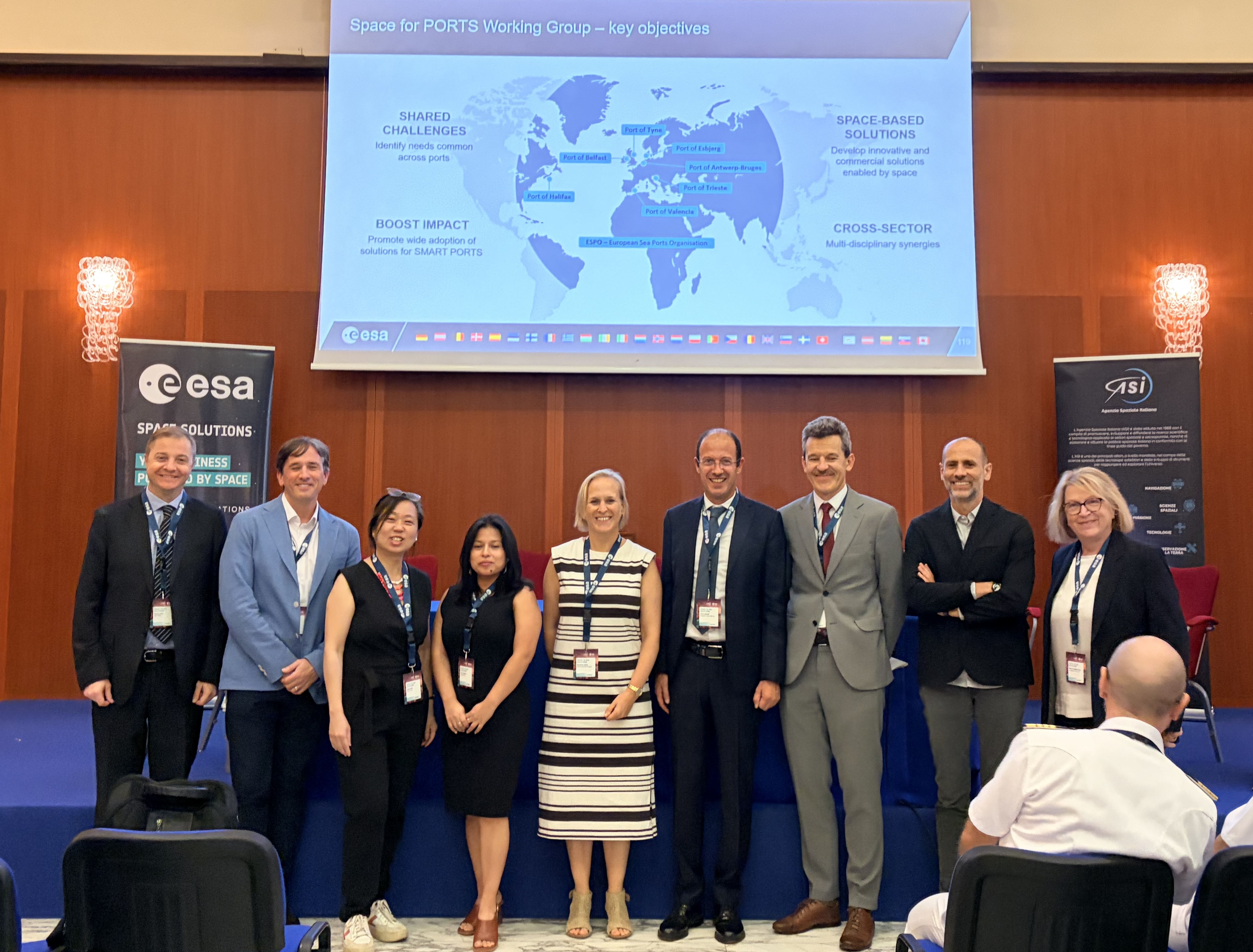
More than 200 representatives from ports, coastguards, industry, institutions and research organisations gathered at the Centro Congressi Stazione Marittima in Naples, on 29 September 2026, for the ESA’s Space-to-Sea Solutions event, co-organised with the Italian Space Agency. The event explored how space-enabled services can support the maritime sector and the blue economy, bringing together perspectives from across the ecosystem.
Opening the proceedings, Maria Libera Battagliere, Chief of the Task Force Space & Blue, an initiative of the Directorate General of the Italian Space Agency (ASI), said: “We are fostering a closer connection between space and the maritime community—and it’s growing. We are working towards the development of a united space-to-sea ecosystem with technologies, infrastructure and expertise across these domains, and are at a time when these technologies can address the needs of the sector.”
As the programme progressed, the discussion turned to ports as vital hubs where maritime operations, logistics, infrastructure and communities converge. Presentations from key actors across the maritime and ports service value chain covered topics such as smart ports, digitalisation and connectivity, safety, logistics and the sustainable blue economy. Real-world testimonials and high-impact case activities supported by ESA Business Applications and Space Solutions (BASS) demonstrated the contribution of space technologies to support safer, more efficient, resilient and sustainable maritime and port operations.
The message was clear: ports are ready to embrace innovation, provided that solutions answer concrete operational needs, integrate with existing systems and demonstrate clear value. Above all, progress depends on ports, industry and institutions working together.
Rita Rinaldo, Head of the Applications, Projects and Studies Division at ESA, observed: “There are always new pressing needs and challenges that we have to face and, from a space perspective, we are open to possibilities, new opportunities to collaborate and create strong projects leading to operational solutions that can be adopted by maritime stakeholders at a large scale.”
Building on years of cooperation with ports and the wider maritime community, ESA announced the creation of the Space for Ports Working Group. The new group will provide a structured forum for ports to share needs and priorities, identify common challenges and use cases, strengthen cooperation with the space communities, define initiatives to develop new space-based solutions and help promising applications/services progress from demonstration to operational deployment.
"Cooperation is key to turn innovation into operational impact. The Space for Ports Working Group will be practical and with a strong implementation focus. Ports challenges are across several sectors and require resilient solutions relying on multiple technologies. ESA BASS is a flexible instrument to cooperate with ports and support companies in developing commercially sustainable applications enabled by space among other technologies, that answer to concrete needs in the maritime sector,” said Enrico Spinelli, ESA BASS Applications Engineer.
The launch marks the next step in a long-term dialogue between the port, maritime and space communities. Ports interested in shaping practical use cases and accelerating operational use of solutions enabled by space are invited to contribute.
ESA BASS accelerates the transformation of innovative ideas into market-ready space-enabled services and applications delivering measurable socio-economic impacts. Furthermore, it de-risks technical and commercial challenges and shortens the path from concept to market, contributing to societal priorities such as the UN Sustainable Development Goals and Europe’s green transition.
Find out more about the ESA BASS work with the maritime sector and opportunities available for your business.
Community reference
Posted to Hero article section
Posted to Hero article section
Energy Aspects Ltd
United Arab Emirates
Turning space innovation into smarter, more resilient energy systems
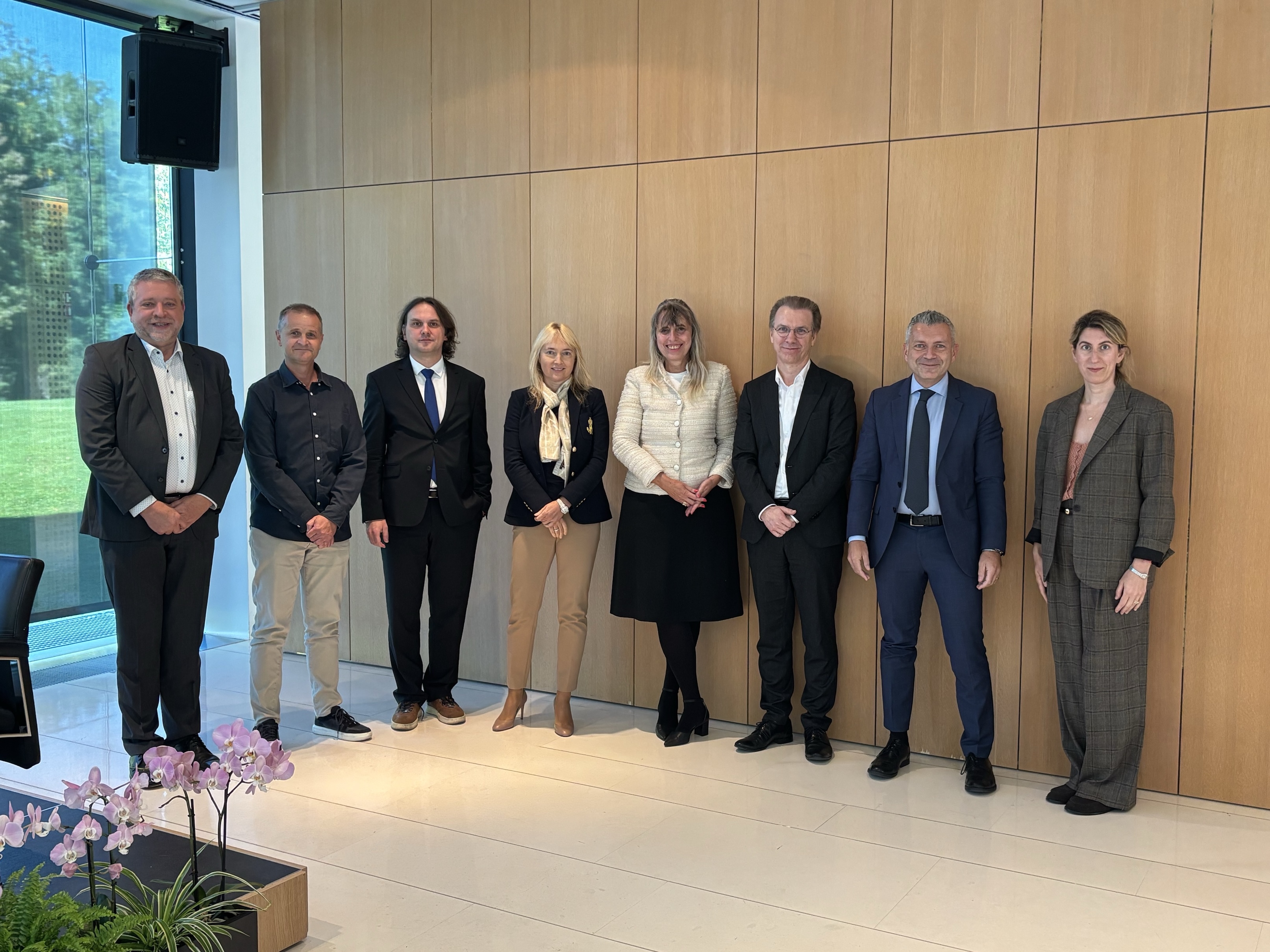
Space-based data and technologies offer new opportunities to enhance the reliability and resilience of electricity grids. Their potential applications were presented by experts from the space and energy sectors at the event “Space Technologies for Electricity Grid Resilience”, co-organised by the European Space Agency (ESA), the Ministry of the Economy, Labour and Sport – Slovenian Space Office, and ELES.
As a result of the energy transition, the integration of an increasing share of renewable energy sources into the power system and the impacts of climate change, electricity grids are facing increasingly complex challenges. High-quality data, advanced forecasting methods and technologies that enable better infrastructure monitoring and early identification of risks are therefore becoming increasingly important for ensuring grid reliability and resilience.
At the event “Space Technologies for Electricity Grid Resilience”, experts from ESA, ELES, ENTSO-E, Belgian system operator Elia, Slovenian research institutions and technology companies presented opportunities for using space-based data and technologies to strengthen the resilience of European electricity grids.
A central part of the event was dedicated to the presentation of the European Space Agency’s new call, Smart and Resilient Energy Systems, developed in cooperation with ELES and open until 27 November 2026. The call is based on specific needs and challenges identified by ELES and aims to support the development of solutions that use space technologies to improve the resilience of electricity grids. The solutions are expected to contribute to better risk forecasting, more effective support for grid operation and long-term strategic planning.
The call represents an opportunity not only for global stakeholders but also for Slovenian technology companies and research institutions active in the development of space technologies, ranging from niche technological solutions to advanced academic research.
The development of the call was made possible through Slovenia’s participation in ESA's Business Applications and Space Solutions (BASS). BASS supports the development of commercially viable solutions based on the use of space-based data and technologies. Its particular value lies in connecting the space sector with users from other areas of the economy.
For Slovenian companies and research organisations, this creates additional opportunities to participate in ESA projects and to develop solutions with potential for application across the wider European market. Slovenia has earmarked EUR 1.5 million for the programme for the next three-year period.
Štefan Kušar, State Secretary at the Ministry of the Economy, Labour and Sport, said at the event: “Satellite data and space technologies are already being used in numerous fields – from energy and transport to agriculture, the environment and security. Their value lies primarily in enabling better information, more efficient management and better decision-making. In the energy sector, satellite data can contribute to improved infrastructure monitoring, risk forecasting, responses to extreme weather events and more efficient grid management.”
He added: “Through our participation in the ACCESS BASS programme, we therefore aim to encourage projects that connect space expertise with the concrete needs of the economy and lead to solutions with clear commercial potential.”
“For us, power system resilience is no longer merely the ability to respond to disruptions, but above all the ability to anticipate them, limit their consequences and recover quickly. This depends primarily on the accuracy of the information available to us and the quality of the decisions we are able to make within an increasingly limited timeframe. We need more precise insights into the state of the grid, better forecasts of operating conditions and more effective infrastructure management. And this is precisely where opportunities for cooperation with the space industry emerge,” emphasised Uroš Salobir, MSc, Director of the Strategic Innovation Department at ELES and Chair of the ENTSO-E Research and Development Committee.
“I believe that solutions developed to address ELES’s needs, given their replicable nature, will also be valuable for further development and deployment by other electricity grid operators,” he added.
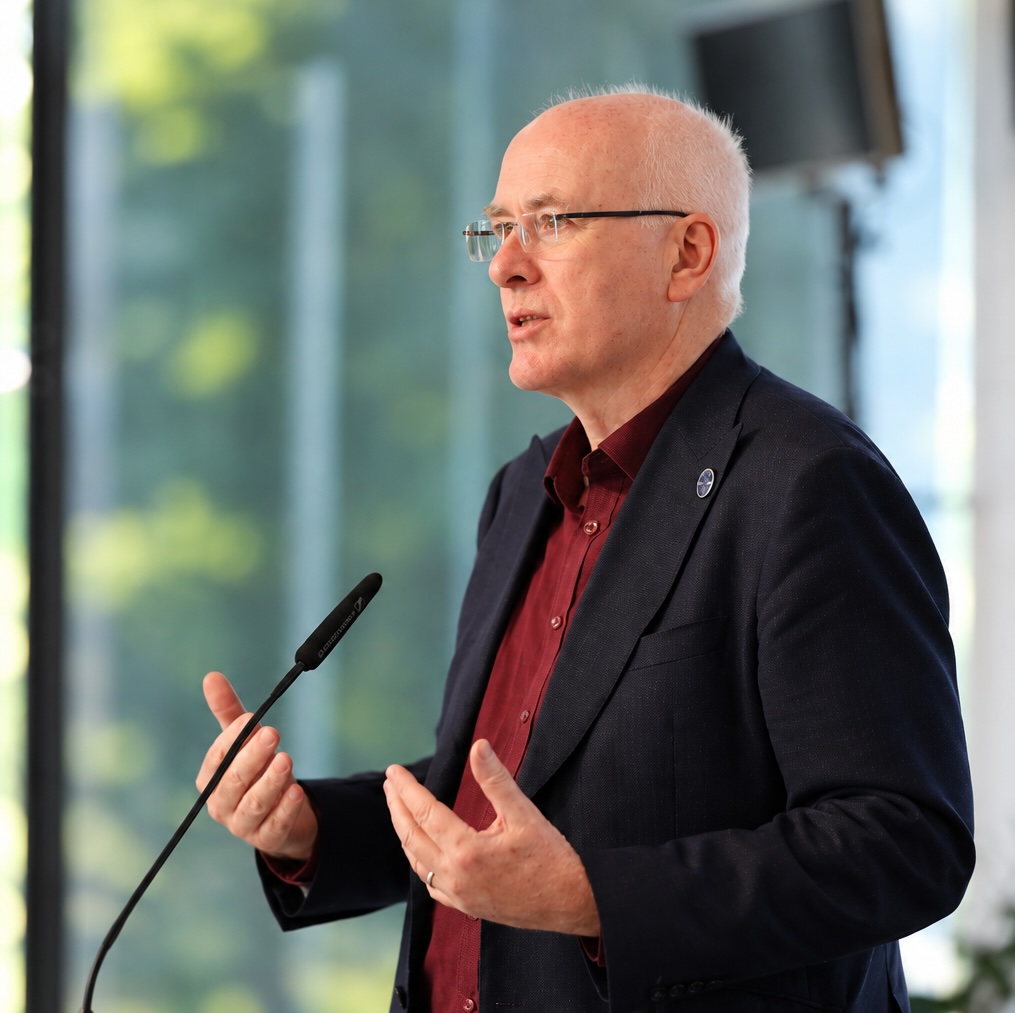 Nick Appleyard, Head of Commercialisation Acceleration Department at ESA concluded: “Slovenia has a dynamic and growing space ecosystem, with strong capabilities and a clear commitment to innovation and international cooperation, providing a solid foundation for the continued development of a competitive space sector. Through ESA’s Business Applications and Space Solutions (BASS), as part of the ACCESS programme, we aim to build on these strengths by connecting Slovenian companies and capabilities with real user needs and wider market opportunities, supporting commercially viable applications enabled by space technologies and data. Our cooperation with ELES, and the initiative we are launching today, reflects this ambition. By bringing together operational expertise, market needs and space-enabled innovation, we can help create new opportunities and support solutions with the potential to generate economic and societal value in Slovenia and beyond.”
Posted to Hero article section
Posted to Hero article section