Riskaware Ltd
Colston Street 15a
BS1 4XE
United Kingdom


Colston Street 15a
BS1 4XE
United Kingdom
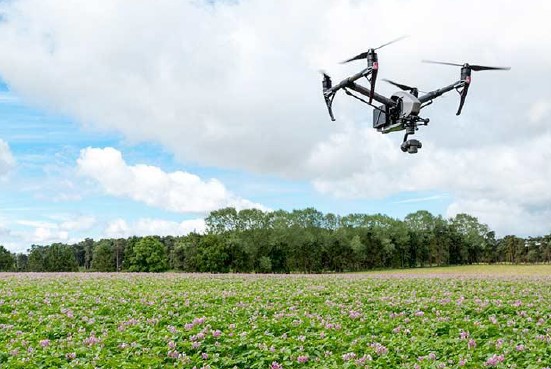
Hummingbird Technologies Ltd, who use drone and satellite technology combined with in house algorithms and AI to boost the effectiveness of farming practices, recently presented at two conferences attended by major names in politics, agriculture, technology and business; Prosperity UK and Westminster Food & Nutrition.
The Secretary of State for Environment, Food & Rural Affairs, Rt Hon Michael Gove MP, said:
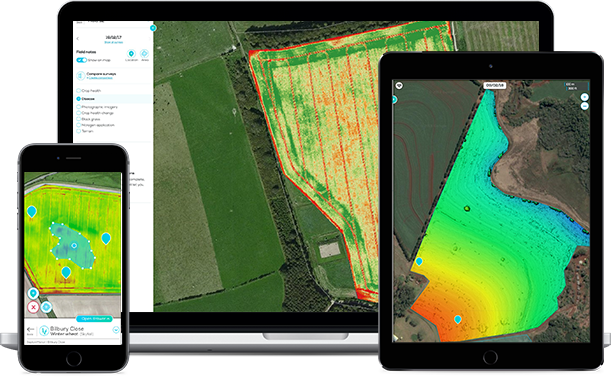
"Across the UK there is a wealth of innovative start-ups redefining what it means to be a farmer or a land manager, and how to farm effectively and sustainably. One company, Hummingbird Technologies uses crop mapping to identify problems in drainage, compaction, nutrition, weeds and pests before they become devastating, and it can pre-emptively detect the presence of particular diseases like potato blight and blackgrass.”
Hummingbird have also featured widely in the press lately, including articles in Farmers Weekly, The Times, The Sunday Times, Agfunder, Medium and BQ Live (links below).
Hummingbird have a team of 40-50 CAA-qualified drone pilots – many farmers and junior agronomists – that fly over crops and capture image data using state of the art multispectral cameras. The data is sent to its cloud-based platform, where Hummingbird’s expertise comes into play. Its 23 strong team of tech wizards includes data analysts, image processing experts, software engineers, machine learning specialists, remote sensing professors and bioinformatics whizzes recruited from around the globe.
Its advisory board now includes the head of Google UK and farming giant Velcourt’s technical director, Keith Norman, with its mission to take a farmer’s crop imagery data and produce something that can directly influence management decisions in real time.
Hummingbird’s focus in the coming months is on their product offerings, recently adding Green Area Index Mapping Machine Learning to their catalogue. The benefits of which include: Accurately measuring GAI of entire fields; Targeted variable rate application of nitrogen and PGRs to optimise crop performance; Accurately defining the number and timing of nitrogen splits to each field; Determining whether a PGR will be cost effective through post-Winter mapping and; Access targeted variable rate nitrogen maps just 24 hours post flight.
E44
5366 Niederanven
Luxembourg
Rue Edmond Reuter 1
5326 Contern
Luxembourg
Avenue des Hauts-Fourneaux 9
4362 Esch an der Alzette
Luxembourg
Friday, March 16, 2018 — World Sleep Day — Ectosense, a digital healthcare solutions pioneer powered Space at ESA Business Applications and focused on the advancement of sleep disorder care, announces that it has secured € 1.5 million in seed funding in a round led by Saffelberg Investments, a leading Brussels-based private equity group. Several industry executives and entrepreneurs will participate in the round.
The European Space Agency’s Social Inclusion Kick-Start Activity offers support and funding to companies looking to develop space empowered services to support social inclusion activities anywhere on Earth.

After three years in development and a successful demonstration project supported by the European Space Agency, SoilEssentials Ltd and Deimos Space UK released KORE, a new cloud-based land management platform at the end of 2017. A new generation of precision farming service, it combines many monitoring means (including satellite) and agronomic tools and yet affordable and simple to use.
Primarily used by agronomists and farming companies, KORE allows the modernisation of practices for effective management of land use, including: yield and crop sensors, disease models and growth models.
Combining multisensor satellites including ESA’s Sentinel Satellites, UAV imagery, tractor-mounted sensors KORE guarantees the availability of data regardless of weather and cloud conditions.
Customers have commented on the ‘perfect layout’ of the system and how easy-to-use it is once the basic principles are understood.
One KORE customer said “I help manage multiple farms and a simple check in to KORE first thing in the morning keeps me informed of the status of all the crops under my care”.
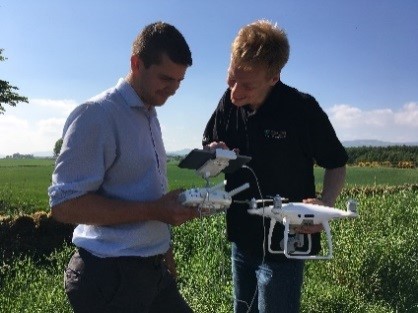
Jim Wilson, Managing Director of SoilEssentials explains, “Our aim with KORE was to create a unique white box web platform for agronomists to rebrand and tailor to their, and their customers’ own needs. We also wanted to dramatically improve the reliability and usability of remote-sensed imagery and we have achieved that with the seamless integration of multiple providers of satellite imagery, UAV images and tractor mounted sensors”.
Michael Lawrence, Business Development Director of Deimos Space UK Ltd said “Our experience in managing and processing large volumes of EO data has enabled us to combine EO data and UAV data to feed the analytic tools in KORE”.