


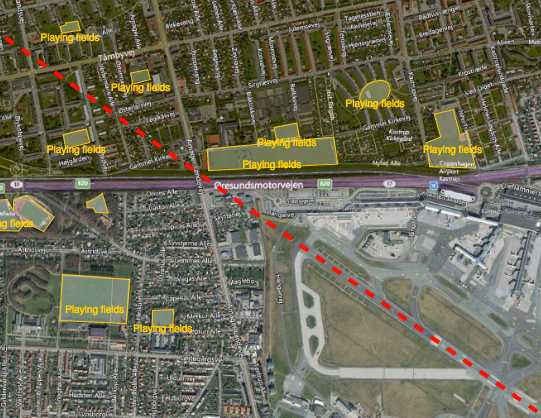
Reducing the risk of bird strikes using satellite images and Ascend’s Normalised Difference Water index software (NDWI)








BROWSE PROJECTS
Based on user needs and industry skills, the evolution of customized solutions and the establishment of innovative services is accomplished through project activities. Focusing on various thematic areas, relevant information on the project activities is provided below.
SCS
Status date: 18 February 2019
Smart Coop Solutions (SCS) is an Internet of Things (IoT) based sensing service enabling the organic farmer to monitor and maintain mobile chicken coops remotely and to guarantee suitable conditions for the animals. Animal welfare under organic standards has strict regulations and requires that coops offer a suitable indoor climate and outdoor environment. Real-time monitoring through the SCS provides farmers with relevant statistics, actionable information and peace of mind through a simple mobile app.
Satellite data analytics for (re)insurance
Status date: 16 January 2019
Geospatial data analytics for (re)insurance
NITREOS
Status date: 16 January 2019
NITREOS is a service platform that serves organic farmers, as well as conventional, in carrying out daily activities in a more efficient, profitable and sustainable way, as compared to the practices they used until now.
NITREOS provides the following services to farmers and agricultural consultants: i) Irrigation Scheduling; ii) Variable Rate Fertilization; iii) Crop Growth Monitoring; and iv) Yield Estimation.

SSFIS
Status date: 02 April 2019
Smallholders are underserved by credit providers as lenders are unable to assess their risk. Sensonomic’s system uses predictive and prescriptive simulations to assess system effects of credit deployment and open the market. With its dynamic data consumption, and iterative and reactive simulations, the service provides a continually updated prediction of how robust the credit providers portfolio is.
Wild boar project
Status date: 14 January 2019
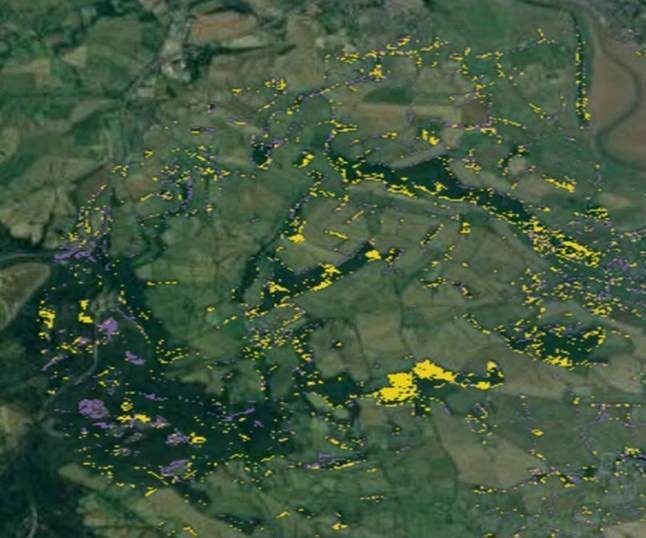
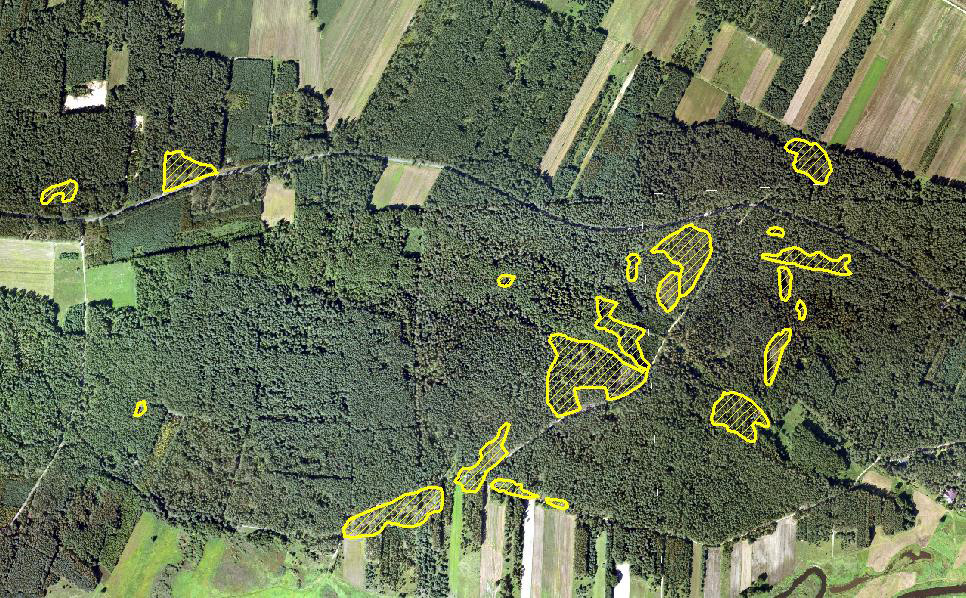
The key product/service is to provide a monitoring of damages to agricultural and environmental areas caused by wild boar (Sus scrofa) using remote sensing data. The technical key idea is to upscale from the investigation of local areas via high resolution aerial images to larger areas via satellite data.

ANHS
Status date: 10 January 2019
The market opportunity identified by DHI GRAS is to provide customers with updated information of navigational hazards including coastlines and submerged reefs in the Arctic.

RWatch
Status date: 14 December 2018
Monitor the number of cars in selected retail outlets, and use car park fill rate as a proxy to monitor and predict the financial performance of retail companies

Entocycle - Accelerating Insect-Based Protein Production
Status date: 05 December 2018
Entocycle has assessed the viability of space-based services for the production of sustainable protein.


TSMF_10CM
Status date: 06 November 2018
The TSMF_10CM investigates the technical feasibility and commercial viability of information services regarding a) regular generation of forest stress maps and b) detection of bark beetle infestation in support of small and medium size forestry operations in Germany.

Energy SCOUT
Status date: 22 February 2024
Energy SCOUTTM is a modular set of services which transform daily and weekly feeds of raw satellite sensor and spatial data into a series of value-added information products, targeting different activities along the oil & gas supply chain.

SWAIR
Status date: 30 June 2022
The aviation industry is becoming increasingly dependent on the GNSS-based technologies, at the same time being aware of its vulnerabilities, including those originating from Space Weather. SWAIR responds to that reality with a system providing GNSS and Space Weather monitoring and performance assessment products, compliant with international regulations and recommendations.

WAMCam
Status date: 03 June 2019
Developed by Archangel Imaging, WAMCam is an innovative solution integrating satellite communication and machine learning technologies to radically improve wildlife monitoring and population studies. Researchers and conservationists working in remote regions can deploy AI-enabled cameras to remotely monitor animal traps and study areas. Receiving prompt notifications of the wildlife identified by the cameras revolutionizes the effectiveness of conservation studies.
SPARK ME
Status date: 23 July 2018
SPARK ME develops an acceleration programme to attract, support and validate new application and service ideas using Satcom in association with additional space technologies. The ultimate goal is stimulating the creation and growth of new markets of space/satellite-based services, addressing the real users’ need and triggering cross-fertilization processes by "contaminating" other areas of activity with the use of space technologies.

WaterInfo
Status date: 12 July 2018
Providing continuous updates on hydro reservoir filling levels by means of Earth Observation data & machine learning to improve power price forecasting, production planning and market analysis and energy trading.

AirTracks
Status date: 05 July 2018
Situational awareness is key in the aviation industry. Whereas many flight information services for scheduled air services transporting passengers, mail or cargo already exist, solutions for other parts of the aviation industry are scarce good. AirTracks is a dedicated flight information service solution that focusses on customer information needs in the fields of UAV and general aviation.
SenZitall
Status date: 15 June 2018
The SenZitall integrated solution is envisaged as a one-stop-shop for smart IPM and horticulture management. It will operate as a fully independent, low power WSN providing high resolution, near real-time environmental data as input to an integrated Spatial Decision Support System (SDSS). The sensors will run with a multi-constellation GNSS and a dual uplink SATCOM system.
Ag|knowledge 4.0
Status date: 26 March 2021
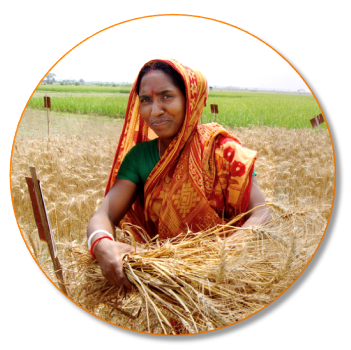
Ag|knowledge 4.0 improves the agricultural risk management for the stakeholders of the agri-supply chain in emerging economies. The services provided exploit various EO-technologies from remote sensing, weather satellites to GNNS to close a big information gap on operational crop monitoring in support of smallholders. The focus of the pilot-demonstration service is on India.

SAQM FS
Status date: 27 November 2019
The project aims to test the feasibility of providing accurate and high resolution global air quality modelling services using vehicles extracted from very high-resolution earth observation imagery. Providing detailed air quality modelling for a large number of cities will improve decision making, enable efficient and cost effective urban growth and reduce the air pollution impact on human health.

Meandair
Status date: 27 May 2019
Every day, pilots have to take difficult decisions about their flight routes avoiding adverse weather and safeguarding fuel-efficiency of their flights. Meandair helps to quickly determine the safest and most fuel-efficient routes for general aviation flights with respect to the ever-changing weather.

DroSecMa
Status date: 13 March 2023
“The fence no longer defines the perimeter.” Exponential increase in capability and reduction in cost has made drones a truly disruptive technology. Their capabilities may be leveraged for significantly improved surveillance and data collection but that also
represent a significant and evolving threat. DroSecMa leverages the capabilities of drones while providing real-time threat mitigation.